Today I can still remember how this smile and the happy ring to his voice highlighted the word ‘Europe’; because today I received from the Bls the first news since they emigrated. In the meantime they must have made it to Lima since their letter was sent from Bermuda. I find it very depressing: I am envious of these people’s freedom, the broadening of their horizons, I am jealous of him because of the chances he has to influence people – and instead of just being happy they complain about seasickness and being homesick for Europe. I have knocked off a few lines of verse to send them: 

Thank the Lord with all your might 
For furnishing your means of flight 
Across the sea from grief and fright – 
To where your woes are truly small; 
To spew a little in the sea 
From a ship that cruises free
Is hardly worth a word at all.
Lift your weary eyes to view
The Southern Cross beyond the blue; 
Far from all the woes of the Jew 
your ship has bridged the ocean. 
Do you yearn for Europe’s shore? 
It greets you in the tropics more 
For Europe is a notion! 

Today I ask myself again the same question I have asked myself and all kinds of people hundreds of times; which was the worst day for the Jews during those twelve years of hell? 
I always, without exception, received the same answer from myself and others: 19 September 1941. From that day on it was compulsory to wear the Jewish star, the six-pointed Star of David, the yellow piece of cloth which today still stands for plague and quarantine, and which in the middle ages was the colour used to identify the Jews, the colour of envy and gall which has entered the bloodstream; the yellow piece of cloth with ‘Jew’ printed on it in black, the word framed by the lines of the two telescoped triangles, a word consisting of thick block capitals, which are separated and given broad, exaggerated horizontal lines to effect the appearance of the Hebrew script. 
The description is too long? But no, on the contrary! I simply lack the ability to pen precise, vivid descriptions. Many was the time, when it came to sewing a new star onto a new piece of clothing (or rather an old one from the Jewish clothing store), a jacket or a work coat, many was the time that I would examine the cloth in minute detail, the individual specks of the yellow fabric, the irregularities of the black imprint – and all of these individual segments would not have been sufficient, had I wanted to pin an agonizing experience with the star on each and every one of them. 
A man who looks upright and good-humoured comes towards me leading a young boy carefully by the hand. He stops one step away from me: ‘Look at him, my little Horst! – he is to blame for everything!’. . . A well-groomed man with a white beard crosses the road, greets me solemnly and holds out his hand: ‘You don’t know me, but I must tell you that I utterly condemn these measures.’ . . . I want to get onto the tram: I am only allowed to use the front platform and then, only if I am travelling to the factory, and only if the factory is more than 6 kilometres from my flat, and only if the front platform is securely separated from the inside of the tram; I want to get on, it’s late, and if I don’t arrive punctually at work the boss can report me to the Gestapo. Someone drags me back from behind: ‘Go on foot, it’s much healthier for you!’ an SS officer, smirking, not brutal, just having a bit of fun as if he were teasing a dog . . . my wife says: ‘It’s a nice day and for once I haven’t got any shopping to do today, I don’t have to join any queues – I’ll come some of the way with you!’ – ‘Out of the question! Am I to stand in the street and watch you being insulted because of me? What’s more: who knows whether someone you don’t even know will get suspicious, and then when you are getting rid of my manuscripts you’ll accidentally bump into them!’ . . . A removal man who is friendly towards me following two moves – good people with more than a whiff of the KPD – is suddenly standing in front of me in the Freiberger Straße, takes my hand in both of his paws and whispers in a tone which must be audible on the other side of the road: ‘Well, Herr Professor, don’t let it get you down! These wretched brothers of ours will soon have reached rock bottom!’ This is meant to comfort me, and it certainly warms the heart; but if the wrong person hears it over there, my consoler will end up in prison and it will cost me my life, via Auschwitz . . . A passing car brakes on an empty road and a stranger pokes his head out: ‘You still alive, you wretched pig? You should be run over, across your belly! . . .’ 
No, the individual segments would not be sufficient to note down all the bitterness caused by the Jewish star. 

This section is full of official expressions and terms which were familiar to those at whom they were directed, and who used them constantly in conversation. It started off with ‘non-Aryan’ and ‘to aryanize’, then there were the ‘Nuremberg Laws for the Preservation of the Purity of German Blood’, followed by the ‘full Jews’ and ‘half-Jews’ and ‘mixed marriages of the first degree’ and other degrees, and ‘Jewish descendants {Judenstämmlinge}’. and, most importantly, there were the ‘privileged {Privilegierte}’. 
This is the only invention by the Nazis where I am not certain whether the authors were fully aware of the diabolic nature of their contrivance. The privileged only existed amongst groups of Jewish factory workers: the preferential treatment they received consisted of not having to wear the star or live in the Jews’ house. Someone was privileged if they lived in a mixed marriage and had children from this marriage who were ‘brought up as Germans’, which means they were not registered as members of the Jewish community. Perhaps this section, which in action repeatedly led to inequalities and grotesque hairsplitting, was really only created in order to protect sections of the population deemed useful to the nazis; but in practice nothing was more divisive and demoralizing for the Jewish population than this regulation. And how much envy and hatred it provoked! There are few sentences that I have heard uttered more frequently and with more bitterness than this one: ‘He is privileged.’ It means: ‘He pays lower taxes than we do, he doesn’t have to live in the Jews’ house, he doesn’t wear the star, he can almost drop out of sight . . .’ And how much arrogance, how much pathetic gloating – pathetic because ultimately they were in the same hell as we were, albeit in a better district of hell, and in the end the gas ovens devoured the privileged as well – how much emphatic distance was couched in the three words ‘I am privileged’. Now, when I hear of accusations levelled by one Jew at another, of acts of revenge with serious consequences, my first thought always turns to the universal conflict between those who bore the star and the privileged. Of course in the cramped living conditions of the Jews’ house – shared kitchen, shared bathroom, shared hall for different groups – and the close-knit groups of Jewish workers in the factories, there were innumerable other sources of friction; but it was the distinction between privileged and non-privileged which ignited the most poisonous resentments, because what was at stake was the most loathed thing of all, the star. 
Again and again, and with only minor variations, I find sentences in my diary such as the following: ‘All the worst characteristics of people come to light here, it’s enough to make you an antisemite!’ From the second Jews’ house onwards, however – I got to know three – outbursts of this kind are always accompanied by the rider: ‘It’s a good thing that I have now read Dwinger’s Die Armee hinter Stacheldraht (The Army Behind Barbed Wire). The people herded together in the Siberian compound of the First World War are not Jews at all, they are racially pure Aryans, German military men, German officers, yet what happens in this compound is exactly the same as what happens in our Jews’ house. It has nothing to with race or religion, it is the herding and the enslavement . . .’ ‘Privileged’ is the second worst word in the Jewish section of my lexicon. The worst remains the star itself. Sometimes it is viewed with gallows humour: I am wearing the Pour le Sémite is a widespread joke; sometimes people claim not only to others, but also to themselves, that they are proud of it; right at the very end people pinned their hopes on it: it will be our alibi! But for most of the time its shrill yellow illuminates the most agonizing of thoughts. 
And the ‘covered star’ phosphoresces more poisonously than any other. According to Gestapo regulations the star has to be worn uncovered, above the heart, on the jacket, on the coat, on the work coat, it must be worn at any place where there is the possibility of an encounter with Aryans. If you open up your coat on a humid day in march so that the coat flap is folded back over your chest, if you carry a briefcase under your left arm, if as a woman you wear a muff, then your star is covered, perhaps unintentionally, and only for a few seconds, or perhaps even intentionally so that just for once you can walk the streets without stigma. A Gestapo officer will always assume that you intended to cover the star, and the punishment is the concentration camp. And if a Gestapo officer wants to demonstrate his zeal, and you cross his path, then the arm carrying the briefcase or wearing the muff may as well be hanging right down to your knees, and it doesn’t matter how correctly the coat is buttoned up: the Jew Lesser or the Jewess Winterstein has ‘covered up the star’, and, within three months at the most, the community will receive a formal death certificate from Ravensbrück or Auschwitz. It will state the cause of death precisely, even with variations and an individual touch; it may say circumspectly ‘died of an inadequate cardiac muscle’ or ‘shot attempting to escape’. But the real cause of death is the covered star. 

The English Arts and Crafts movement re-animated indigenous northern building styles, gardening traditions, decorative and home making practices, and craft forms. Promoting an integrative architectural approach to the decorative and household arts, and a merging of aesthetic appreciation and pedagogy into every aspect of domestic life, the early proponents of the Arts and Crafts movement coined the notion of lifestyle as a distinct aesthetic category and a commodity. Where the rural working class was seen to have a daily life, with all of that term’s connotations of repetition, boredom, custom, and work, the aesthetic classes adapted from them stylistic tropes and material practices, collaging from these borrowings a ‘lifestyle’ which bore the signs and accessories of rural authenticity and the privileged agencies of moneyed choice. But in the movement’s early stages, a vigorous anti-capitalist ideology motivated the new design aesthetic. In ‘Making the Best of It,’ one of his many published lectures on design philosophy, William Morris promoted his ‘lurking hope to stir up both others and myself to discontent with and rebellion against things as they are, clinging to further hope that our discontent may be fruitful and our rebellion steadfast, at least to the end of our own lives, since we believe that we are rebels not against the laws of Nature, but the customs of folly. For Morris, ‘the customs of folly’ were competitive commerce and the division of labour. He intended the Arts and Crafts to ameliorate the alienation of workers from ‘the field of human culture’ by reconstructing a holistic productive environment for objects that would bear their maker’s full intelligence, imagination, and skill. Workers needed not only money, but also leisure and art and praise. Morris’s utopian rhetoric flowed; he anticipated the day that would bring ‘the visible token of art rising like the sun from below – when it is no longer a justly despised whim of the rich, or a lazy habit of the so-called educated, but a thing that labour begins to crave as a necessity, even as labour is a necessity for all men …’ The new movement strove to reinhabit (one is tempted to say redecorate) an English radical workers’ history extending from Watt Tyler and Cromwell to Marx; but Morris’s was to be a soft rebellion, implemented by art, rhetoric and consumption. Lifestyle became an ethical category.
Nature was the pattern book for Arts and Craft ideology. As Morris expressed it, ‘what else can you refer people to, or what else is there which everybody can understand?’ His tone was not ironical. The Romantic movement of the eighteenth and early nineteenth centuries had constructed an idea of Nature as democratic and populist metaphor, the universal paradigm of sincerity and authenticity. Revolutionary ideals of nature became popular not only among a political and cultural elite, but through the growing middle-class reading public that was reached by the mass distribution of the new literature of Rousseau, Wordsworth and the English Romantics, and Goethe. The Romantics, in part through their decontextualization of vernacular and folk usages and contents, and their construction of new individualist metaphors of subjectivity, made a Nature that would function as foundation for aesthetic practice conceived as radical subjective agency. ‘Natural man is entirely for himself,’ Rousseau states in his pedagogical tract Emile. ‘He is numerical unity, the absolute whole which is relative only to itself or its kind. Civil man is only a fractional unity dependent on the denominator.’ Nature was reclaimed from the shifting artifices of eighteenth-century court pastoral, from ironic citational practices and equivocal interreferentiality, to serve the Romantic myths of ‘origin,’ ‘autonomy’ and ‘authenticity.’ The garden received the imprint of these contemporary ideals of nature.
In England, garden design had developed into a richly coded practice that charted developing national ideals of nature and ‘the land.’ Through quotation of landscape painting and classical poetry, manipulation of plant materials, water and grade, and changing articulations of scale, enclosure and geometry, in images that ranged from the mannered and Italinate artifice of the baroque parterre to the gentle ruins and glowing distances of Claude Lorraine’s mythic landscapes, the gardens of English gentry expressed the movement of dominant cultural imaginations of nature towards the infinity of the neoclassical landscape. By the eighteenth century England was at the avant-garde of European garden design. A handful of gardeners – William Kent, Vanbrugh, Capability Brown – and their aristocratic patrons together dissolved the traditional boundaries and forms of the garden enclosure. They erased the geometrical symmetries of parterres and the visual obstruction of fences, and sometimes even villages, to construct for the huge country estates of the gentry and image of a benign mythic utopia, wherein, as Alexander Pope wrote in Windsor Forest, ‘order in variety we see, / And where, though all things differ, all agree.’ Fastidiously situated groves were reflected in the serpentine waters of artificial lakes; manors were aligned to views of recently constructed ‘ruins’; urns, statues and inscriptions quoted classical poets; house façades were refaced as classical temple porticoes; the countryside became a metaphor for a broad comparison of English and Greco-Roman practices of Empire. In compositional terms, William Kent elided the boundary between the garden as an enclosed space and the surrounding landscape, extending the designed vista to the horizon. The visual impression was of unbroken expanse, the vista replicating the unbroken power of aristocratic ownership. Capability Brown, Kent’s successor in landscape innovation, stripped the expanded landscape of extraneous cultural allusion, removing temples and other referential garden architecture. Brown’s minimalist expanses were composed only of elements: water, trees, land and horizon. Nature was reimagined as a field of abstract plastic forms whose sparse arrangement in heavily theorized curves and serpentines recalled the Burkean sublime. Brown blurred the representational finitudes of economy and perceptions of boundary to an unrestrained abstraction of smooth, green continuity, linking English and classical landscapes through the sophisticated restraint of his structural vocabulary, rather than through the plenitude of figural allusion. Brown’s garden was a canvas for reverie. The foreground was not a contested or problematic site; nor was the aristocratic dreamer. The rolling turf simply ended at the manor door. Looking out from the windows, all of nature appeared as one elegant and inherited composition, the horizon itself an allegory of pastoral, and national, infinity.

Robinson’s plant naturalization techniques symbolically domesticated the rougher boundaries of the landscape, bringing forest, alpine and meadow pictures into the garden purview. Where previously landscaping had addressed the representational boundary between garden and agricultural landscape, Robinson represented the uncultivated wilderness as a garden. Now Nature aspired to the condition of presocial, Rousseauian wilds. In practical, horticultural terms Robinson contributed to a renewed general interest in hardy, nonhybrid plants and flowering bulbs. In The English Flower Garden, he held forth the cottage garden as a primitive design ideal, and plant source, for the old-fashioned flowers of English poetry and folklore. Engravings of vine-slung thatch gables and overgrown stone doorsteps accompanied a text that explained the practical economy of cottage-garden beauty. ‘Why should the cottage garden be a pictrue when the gentleman’s garden is not? The reason is, that one sees the plants and the vegetation not set out in any offensive geometrical or conventional plan … a plan should be subordinate to the living things.’ Robinson showed that ‘beauty’ was accessible to anyone who could root a cutting, enjoy a ‘wild’ picture, or appreciate and imitate the purportedly naïve aesthetics of the working class. Gardens were freed from the gentry. ‘The charm of simplicity and directness’ was within the compass of the middle class.

‘The site prescribes the character of the building; the building aims to be as it were a part of the site; and if the architect is obliged to call in a landscape architect to enable him to understand the possibilities of the site, it goes without saying that he must base his design upon the understanding thus received.’

When structure is increasingly expressed through sociality and use, rather than solely through materials, dwelling plays on an ephemeral architectural practice. Dwelling overlays and sometimes transforms the principled concepts of the designer. When Twizell left and the Ceperleys moved in, they brought with them a gardener, Mr. Legge, who tended and improved the family utopia. Snapshots reveal an inordinate fondness for terra cotta rabbits. bunnies dotted the serene slopes of the lawns. Potted palms flanked gravel walks in a throwback to the Victorian delight in plant exoticisms; a rock garden and lily pool with little bridge offered manageable domestications of picturesque ruggedness and changeability. Mr. Legge decked the good bones of Twizell’s modern structure with the superfluities and inconsistencies of untrained, nostalgic, human delight. And amidst the lovely misuses of modernism, a leisurely life of family entertainments, picnics and light gardening unfolded.
In Jane Austen’s England, the dining room and the garden each requested a culturally appropriate mode of domesticity or recreation. The Arts and Crafts dearticulated and mirrored boundaries, rendering these two spaces as interchangeable social sites. ‘Lifestyle’ spilled across the opened structures of the home; lifestyle was itself the newest recreation in the Rousseauian Nature imagined by the Arts and Crafts garden: ‘The dining room would be everywhere – in the garden, in a boat, under a tree, or sometimes near a distant spring, on the cool, green, grass, beneath clumps of elder and hazel … We would have the lawn for our table and chairs; the ledges of the fountain would serve as our buffet table; and the dessert would hang from trees. The dishes would be served without order; appetite would dispense with ceremony.’
At Fairacres, the dining room windows were perhaps hung with William Morris’s popular chintz, ‘The Strawberry Thief.’ Out on the lawn, the furniture and silver shone under a sun ‘bright, but not oppressive.’ Arts and Crafts design infiltrated and domesticated the pastoral, overlaying the site with a specifically ethnic origin myth. If the spatial chronicle of the house and garden can be considered as the gradual discorporation of the propriety of the boundary or wall, perhaps the transient and beribboned rhetoric of the picnic is the most modern of architectures.

Elliot suggests that in the idea of the humble cottage garden there was more nostalgic fantasy or false memory than historical evidence: ‘There is little evidence for the existence of cottage gardens before the end of the eighteenth century.’ (See Elliot, 63.) But gardens leave so little evidence that all garden historiography is in a sense a kind of Freudian dreamwork. In what season, through what representation or renovation, from what point in its development, with what persistently spreading perennial, may we retrospectively construct an image of what a garden was? And in its reimagining of nature, history and heritage, the garden itself is a constructed dream. Perhaps Freud and Jekyll’s pilgrimages to Italy ought to be considered as parallel journeys.

The secret of improved plant breeding, apart from scientific knowledge, is Love.

—Luther Burbank

Baudelaire says art must be stupid. And I identify with that, maybe I would sort of use this term of ‘the possible’ rather than ‘the stupid’ but it’s very similar in saying that, you know, I agree with Baudelaire in saying that we don’t make art in order to express our supposed intelligence. We don’t write a poem to show how smart, you know, we are and how we have understood something, we write ‘cuz we don’t know what the hell is going on. We write it from a point of stupidity. And I think that anything is only interesting insofar as it begins from this point of stupidity and tries to remain in it and resists the often irresistible nature of cleverness.

If architecture is entombed structure or thanatos, ornament is the frontier of the surface. It is at the surfce where lively variability takes place. The architect Gottfried Semper said of the biologist Cuvier’s display of comparative anatomy at Le Jardin des Plantes in Paris, ‘We see progressing nature, with all its variety and immense richness, most sparing and economical in its fundamental forms and motives. We see the same skeleton repeating itself continuously but with innumerable variations.’ The Office for Soft Architecture finds the chaos of variation beautiful. We believe that structure or fundament itself, in its inert eternity, has already been adequately documented—the same skeleton repeating itself continuously. We are grateful for these memorial documents. But the chaos of surfaces compels us towards new states of happiness. We concur with Ruskin, who in The Stones of Venice stated: ‘We have no more to do with heavy stones and hard lines; we are going to be happy: to look round in the world and discover (in a serious manner always however, and under. a sense of responsibility) what we like best in it, and to enjoy the same at our leisure: to gather it, examine it, fasten all we can of it into perishable forms, and put it where we may see it forever.

In 1806, as Goethe wrote his Theory of Colours in Weimar, the city was occupied by Napoleon’s troops. In that year Napoleon had changed the colour of his army’s uniform from revolutionary blue to white. Russia had blocked the export of indigo to France. There was not enough blue dye to supply the army. In Weimar they marched in white uniforms with gilded buttons, a moving whitewashed corridor that prefigured Ruskin’s decorative assessment of whiteness and gilding. But white was poor for morale; it was too true and too sincere. At battle each soldier could read death on his fellow’s tunic. Within the year, Napoleon decreed a return to blue uniforms, on which blood and gore and battlefilth were less alarmingly visible. He began to promote the French cultivation of woad for use as a blue dyestuff in place of indigo. Goethe wrote, ‘We love to contemplate blue, not because it advances to us, but because it draws us after it,’ perhaps a more agreeable persuasive rhetoric for an army to perpetuate. But the soldiers had been required to purchase white coats, and these increasingly besmirched garments could not be eradicated from the ranks, which now appeared motley, impure, random.
We wonder how white became so innocent. When Goethe claims for the colour white that in organic forms it tends to appear only in the interior, rather than on the surface, we think of the bones of a mammal or the pith of a stem. We think of Goethe’s whitewashed hallway, running through Benjamin’s dream like a spine. But affect can’t be controlled. White proposes a disciplinary unity and it always fails. It already submits to pigment and chance. We think that by dyeing our costumes and carrying our colourful objects and cosmetics we lend mobility to the plants and deny for a while each species’ propriety. The surface of us overlaps with other phyla. Walking and parading we mix the surface of the earth, though we might intend that march’s purpose as ordination. Colour marks exchange. It is border-work. Mixture is our calling. 

As a boy Sigmund Freud worshipped Heinrich Schliemann, the great archaeologist of Troy. Schliemann was a businessman who financed his excavations of the lost Homeric city by investing in the indigo trade during the Crimean War. Battlefield slaughter expanded the indigo market. The blue skin of imperial Europe supported the structural phantasy of origin. The archaeological metaphor called Troy—which informed Freud’s psychoanalytic fiction of a spatially structures consciousness – was financed by the movement of pigment across contested borders. Metaphor inflates an economy. Colour is structured like a market. Both colour and market are measured combinations of sentiment and emotion. A political economy appears to contain their instability, but at any moment this structure could be flooded by the randomness of affect. Plato and Aristotle thought paint or pigment was a drug or a pharmakon: an occult substance that, like poetry, could stimulate unaccountable change. They wished to excise it from the polis. 
The white wall is a phantasized exoskeleton, not so much a screen memory as a ghostly amnesia. Like the whitewashed mirage of an army, it dissolves as approached and the redundancy of mortal pigment emerges, shot through with sullied fragments. The ad hoc semantics of pigment scumble intention. The dichotomy of colour and pigment is false and therefore instructive. For Newton, of course, all colour joined in the pure concept of whiteness, of light. But we are attracted to the weakness and impurity of the bond of pigment, because we can identify with nothing other than instability. This identification is admittedly a style of taste, but it also improvises a political alignment.

Repeatedly we have attempted to define colour for ourselves, although it is only with great difficulty that we depart from the sultry glamour of pigment. Between mysticism and glamour, we would rather not choose.
We could say juice, or pigment, to indicate that aspect of the substance that travels across. Such juice is always psychotropic. It translates mentalities. We might say that pigment is that motion spontaneously produced by substance in conjunction with light. Dangerously pigment smears. Artifice is the disrespect of the propriety of borders. Emotion results. The potent surface leans into dissolution and disrupts volition – it’s not a secluding membrane or limit. To experience change, we submit ourselves to the affective potential of the surface. This it the pharmakon: an indiscrete threshold where our bodies exchange information with an environment.
When we say juice, we mean a tinging juice, a juice which marks the surface through co-operation. Such a juice is to be found in the juice of ink, the red juice, things filled with a red juice, a concentrated juice. Armies run with juice. This juice has a property, this juice appears to be connected to phenomena. Pure red juices are common as are the juices with very rich and powerful hues. Some-thing yields a beautiful yellow juice. flowers and their juices are bleached by sulfur. The glamorous surface is nourished by perfect juices. When we want to produce something exciting, something alluring, we begin with pigment or juice.
Colour differs from substance. Is colour always lyrics? We are not sure. It seems to consist of the detritus from natural history stuck into sentiment. For example, it is said that among humans, women are colourful. Nothing more needs to be said on this theme. We want to expose colour, bring it out of the boudoir, where colour and truth are always bickering. 

Colour itself speaks, so thankfully can’t be truth, which is silent and must be read. The polis is quite colourful. Each unaccountable surface ripples as if italicized. The eternal economy never wants to complete itself.
Colour receives belief in the form of a name. ‘Blue.’ It literally attaches to the architecture, cracking and splitting around it like a shell or dangling from it like capital or savage ornaments or ideals or words. It attaches to consciousness. The name bloats and travels and drifts with arcane logics. It can appear as though colour, like an army, is made from memory and fear and lust. The names are public screens on which sentiment performs. When we walk in the inscription-splattered street we are interested to question the relation of surface to belief. This question defines our stance as citizens. Thinking about colour we open up a space in the surface, the potent space between substance and politics. A tiny freedom drifts there and we adore it. But our gluttony for the ethereal has not to do with fame or glamour or scale. Through gluttony we come to resemble history. Through gluttony we are indexical.
Aristotle said that colour is a mixture of three things: ‘the light, the medium through which the light is seen, such as water and air, and thirdly, the colours forming the ground from which the light happens to be reflected.’ These remain useful differentiations. The medium is also an economy. Another way of saying this is that the triad of pigment, colour, medium always trembles, and could at any instant dissolve. The idea of unstable mixture remains essential to us. The notions of colour and pigment are mixed through as though marbled by their historical medium. Like the myth of the market, they must observed with ambivalence. 

When the baby is born there is no place to put it: it is born, it will in time die, therefore there is no sense in enlarging the world by so many miles and minutes for its accommodation. A temporary scaffolding is set up for it, an altar to ephemerality – a permanent altar. This altar is the Myth. The object of the Myth is to give happiness: to help the baby pretend that what is ephemeral is permanent. It does not matter if in the course of time he discovers that all is ephemeral: so long as he can go on pretending that it is permanent he is happy.

– Laura Riding, Anarchism Is Not Enough

The history of scaffolding has been dismantled. we can’t write this history because there are so few documents – only a slim sheaf of photographs. So we study the construction of the present and form theories. We use the alphabet as a ladder.
Scaffolding, from scalado, to storm by mounting a wall by ladders.
We believe that the object of architecture is to give happiness. For us this would mean the return of entropy and dissolution to the ephemeral. The architecture of happiness would rehearse a desanctification of time, which is itself only a scaffolding. We live on this temporary framework of platforms and poles, as diagrammed in the most rudimentary fashion by the letter ’t.’ All the ceremonies of transition take place on such a makeshift planking: judgements, executions, banquets and symposia, entertainments and recitals, markets and bazaars, funerals, births and weddings and illicit fuckings are rehearsed and performed to their witnesses on this transient stage, which is sometimes decorated with drapes or swags or flags or garlands, sometimes padded for the comfort of the performing body, sometimes left bare as if to state the plain facts of life. the scaffold is a pause, an inflection of passage It accommodates us in a shivering.
Planks for scaffolding should be carefully inspected and tested. Men might spring on the plaks or tap them for sound. these tests are not likely to injure a good plank. Photographs of special scaffolds and other rigging interest us. In preparation for the photograph the men should arrange themselves on the scaffold as in a frieze, standing with their various brimmed hats against the sky, or sitting swinging their legs from a more supple plank with the hacked forest behind them or the bare place that will become the city. We find such an image quite attractive.
Firstly, a scaffold lists, in every way.
List, as in a record, a number, a law, a row or rows; to enter, to register, to enlist; a method, a border or bordering strip, a salvage, a strip of cloth, a stripe of colour, a ridge or furrow of earth; to produce furrows or ridges; a careening or leaning to one side, as a ship; to be pleasing, to desire, to lust. To list a narrow fillet. Listless. Enlisting cloth. A stuttering. A conceptual limp. Scaffolding is analogy. It explains what a wall is without being a wall. Perhaps it describes by desiring the wall, which is the normal method of description. But also the scaffold wants to fall away from support. Its vertigo is so lively. The style of fidelity of scaffolding is what we enjoy. It finds its stabilities in the transitions between gestures.
Rumour has it that the same designer once drew plans of temporary supporting structures alongside those of the permanent edifices. The story can be illustrated by the working drawings of ancient masonry bridges accompanied by their designated falsework. Now scaffolding floats freely, detached from the severity of an origin. It is a system, not an organism. Its repeating components follow the pattern of a drifting list. The list is the most rudimentary system. Rhythm is so elegant.

The scaffold works as a filter of exchange and inscription that localizes and differentiates the huge vibratory currents swathing the earth. It rhythmically expresses the vulnerability of the surface by subtracting solidity from form to make something temporarily animate. It shows us how to inhabit a surface as that surface fluctuates. Whatever change is looks something like this a leaning, a consciousness towards, a showing to. We like scaffolding because, lingerie-esque, it disproves the rubric of the monad.

When an immobile building, inevitably bored of its environment, wants a new site, a scaffolding can be constructed around it. Scaffolding substitutes for a site. By compression or condensation it transforms an atmosphere to a condition of access which is also a screen. This idea is easily inflated towards the surreal or the homeopathic, but it is based on observation. When at night we hear the scaffolding rustle, then look up to watch it sway, we feel voyeuristic longing. In darkness the scaffolding is foliage. Sometimes swinging on special leafy scaffolds we feel compelled to loose our little slipper.
When we awake near a scaffold the frieze of men is calling numbers into the morning. thus the scaffold promises practically everything to the architect both languorous and alert. Then it disappears. As for us, we too want something that’s neither inside nor outside, neither a space nor a site. In an inhabitable surface that recognizes us, we’d like to gently sway. Then we would be happy.

Thickets, a cave, a hut of boughs are the components of landscape that conventionally provide primordial coverage. Structurally the shack is a thickening, a concentration, an opacity in the lucid landscape. this lyric site of nature’s contraction is the minimum of shelter. Laugier, the French architectural theorist writing in 1753, followed Vitruvius and Alberti by posing the shack or hut as the first principle of architecture, the idea of which all theory extends. Filmically he described the primitive’s trajectory – from repose on the idyllic lawn to the anxious retreat to cover, and ultimately to the organization of components of the landscape into architecture: ‘He is in need of a place to rest. On the banks of a quietly flowing brook he notices a stretch of grass; its fresh greenness is pleasing to his eyes, its tender down invites him; he is drawn there and stretched out at leisure on the sparkling carpet, he thinks of nothing else but enjoying this sparkling gift of nature … But soon teh scorching heat of the sun forces him to look for shelter. A nearby forest draws him to its cooling shade; he runs to find a refuge in its depth, and there he is content … The savage in his leafy shelter, does not know how to protect himself from the uncomfortable damp that penetrates everywhere; he creeps into a nearby cave and, finding it dry, he praises himself for his discovery. But soon the darkness and foul air surrounding him make his stay unbearable again. He leaves and is resolved to make good by his ingenuity the careless neglect of nature. he wants to make himself a dwelling that protects but does not bury him. Some fallen branches in the forest are the right material for his purpose …
Laugier tells a simple story: the retreat from lucid pleasure to protective opacity, then to willed structure. Is architecture a monument to the failure of pastoral utopia, whose greeny bliss only passes, like a tempest? The shack as first principle seems to be a protection against weather and against time.

The landscape includes the material detritus of previous inhabitations and economies. Typically the shack reuses or regroups things with humour and frugality. The boughs of a tree might become a roof. A shack almost always reuses windows, so that looking into or out of the shack is already part of a series, or an ecology, of looking. In this sense a shack is itself a theory: it sees through other eyes. This aspect of the shack’s politics prevents shack nostalgia from becoming mere inert propaganda. The layering or abutment of historically contingent economies frames a diction or pressure that is political, political in the sense that the shack dweller is never a pure product of the independent present. He sees himself through other eyes.

When Thoreau gathered the materials he would need to build his shack at Walden Pond, he bought the shanty belonging to an Irish labouring family who were moving on. The Irish wife described the Irish shanty with exemplary frugality: ‘good boards overhead, good boards all around, and a good window.’ For these good items, to be removed by small cartloads to his own site, Thoreau paid four dollars and twenty-five cents. And in his catalogue of materials he lists ‘Two secondhand windows with glass … $1.25.’ Each shack dweller is an economist who thrives in the currency of the minimum, the currency of detritus. The economy of the shack enumerates necessity, or more exactly it enumerates a dream of necessity, using what’s at hand. This improvisatory ethos is modern. It is proportioned by the utopia of improvised necessity rather than by tradition. How much would we need? The shack is always conditional. The disposition of things is an economy in time. The shack is in flux.

A shack describes the relation of the minimum to freedom. We consider that the idea of the minimum, the idea of freedom, the idea of the shack, shape our beliefs. The freedom from accoutrement popularly stands as liberty. Here we sing along with Joplin’s cover of ‘Me and Bobby McGee,’ and we understand our own youth as a pre-economic myth. Thoreau’s image of prelapsarian shelter pertains to the innocence of Romanticism’s child: ‘We may imagine a time when, in the infancy of the human race, some enterprising mortal crept into a hollow in a rock for shelter. Every child begins the world again, to some extent, and loves to stay outdoors, even in wet and cold. It plays house, as well as horse, having an instinct for it … It was the natural yearning of that portion of our most primitive ancestors which still survived in us. From the cave we have advanced to roofs of palm leaves, of bark and boughs, of linen woven and stretched, of grass and straw, of boards and shingles, of stones and tiles. At last, we know not what it is to live in the open air, and our lives are domestic in more senses than we think. From the hearth to the field is a great distance.’ It is the task of the shack to minimize this distance, in the service of an image of natural liberty. We play house in shacks.

Or the monad is a spiritual shack. It stores belief. Like any etymological construction, each shack is a three-dimensional modification of belief.

When the shack dweller lays in supplies, she is composing a politics. The shack demonstrates the site-specific continuum between belief and the perception of necessity. We like to remember that politics are collective experiments in belief.

We read the shacks’ inventories as legends or indices to their political aspirations. The two shacks, one a paranoid extrusion of its puritanical ancestor, communicate via their lamps and their markedly diminutive mirrors. We wish to note also what these shacks exclude: the textile arts have no place in the ur-hut. Windows are never curtained and floors are not carpeted. It is as if fabric would screen or muffle a shack’s sincerity. Thoreau explains: ‘A lady once offered me a mat, but as I had no room to spare within the house, nor time to spare within or without to shake it, I declined it, preferring to wipe my feet on the sod before my door. It is best to avoid the beginnings of evil.’ Was the evil mat hooked or braided or woven? Did it perhaps spell out welcome?

In Discourse on the Origin of Inequality, written the year Laugier’s controversial nad popular treatise was published, Rousseau associated the first shack with the birth of social envy and conflict. Where Laugier had aligned the shack with a structural ideal of simplicity and purity, Rousseau conceived it as a defensive barrier against a conflict it also instigated: ‘Men, soon ceasing to fall asleep under the first tree, or take shelter in the first cave, hit upon several kind of hatchets of hard and sharp stones, and employed them to dig the ground, cut down trees, and with the branches build huts … This was the epoch of a first revolution, which produced the establishment and distinction of families, and which produced a species of property, and already along with it perhaps a thousand quarrels and battles. As the strongest, however, were the first to make themselves cabins, which they knew they were able to defend, we may conclude that the weak found it much shorter and safer to imitate, than to attempt to dislodge them …’ Here primal shack-evny stimulates mimesis, which Rousseau configures as the technical compromise of ‘the weak’; architecture inaugurates itself as social rhetoric by framing the family and symbolizing ownership conflicts. This is to imagine sociality in terms of capital and weakness in terms of lack. Certainly the shack can perform this function. But we experience weakness as pliancy, the structural ability to welcome desire and change.

Therefore it is not our intention to focus solely on the shack’s protective carapace at the expense of its inner ecology of gesture. In Alberti’s account of the first shack, in On the Art of Building in Ten Books, published in 1450, the original architectural gesture is not the erection of defensible barriers, but the disposition of interior spaces according to their use: ‘In the beginning, men sought a place of rest in some region safe from danger; having found a place both suitable and agreeable, they settled down and took possession of the site. Not wishing to have all their household and private affairs conducted in the same place, they set aside one space for sleeping, another for the hearth, and allocated other spaces for different uses.

The shack is an allegory of origin. We need only study the matter to discern the structure of beginning. By identifying with its disposition, we retroactively become the cause of the shack. We wonder if there exists a body the shack could not imagine.

For Vitruvius the shack follows from the sociality of speech. In his shack story, at the beginning of On Architecture (27 B.C.), language facilitated men’s first social relations. They gathered together around fire and learned to name by imitating one another. The partition and structure of communicative speech and its mimetic transmission was a necessary precursor to architectural structure: ‘After thus meeting together they began to make shelters of leaves, some to dig caves under the hills, some to make of mud and wattled places for shelter, imitating the nests of swallows and their method of building. Then observing the houses of others an adding to their ideas new things from day to day, they produced better kinds of huts.
We find in Vitruvius a social generosity lacking in the republican myth of the shack: here mimetic building is not the guarded site of security, but a form of engaging speech. In the long series of the Vitruvian shack, mimesis constitutes a creatural social pleasure, a collective communicative agency, contrary to Rousseau’s figuration of mimetic art as lack. At the threshold of the Vitruvian shack, architecture’s choral function knits the commons.

A shack tentatively supplies a syntax for temporal passage. The shack is the pliant site that adds to our ideas new tropes, gestures learned from neighbours, creatures, moot economies, landscape, and the vigour of our own language in recombination. We wish to reimagine the city through the image of the Vitruvian shack. Here citizens inflect shelter with their transient and urgent vernacular, which include the mimetic lexicons of technology in the service of the frisson of insecurity. Here insecurity figures, not as terror, but as erotic collective being. We love shacks because they pose impossible questions. How can we change what we need? How can we fearlessly acknowledge weakness as an animate and constructive content of collectivity? The city is the shack inside out. It choreographs the delicious series of our transience. This is the future. 

Screenshot 2025-05-26 at 10.54.09 AM.png

Screenshot 2025-05-26 at 11.13.03 AM.png

IMG_8848.PNG

bafkreibhwvitxnobay3fnihgweuz3hhg6wyisiy7zticbomrwf3sne4eem.jpg

These rooms continue to pose questions. We slide our eyes over their surfaces, testing and absorbing. We still search them for information about strangeness we can’t yet name. We might recognize the shape of change. This is called research. It intuits absence among the materials.

a complex bricolage of disparate objects placed in intimate profusion furnish Atget’s own relatively modest lodgings. Gleanings of corporal habit surface the workers’s space, complicating the idea of utility – function is texturally elaborated, not formally reduced. Modernist conventions – in which function is reduced to its formal minimum – are at once evident in the décor of the wealthy and absent in the workers’ rooms; in this latter place, no gesture is reduced to a single use value, and so thickly accreted layers of errant physicality supercede modernist form. Proletariat furnishing receives and represents in advance the pleatings of potential bodies, so that surface itself seems to act. People’s agency has not been abstracted into the transparency of money or authority or function; a stimulating deviance in form interrogates the very concept of function. In moneyed space, the ethos is hygienic. Every housekeeper knows that hygiene is an economy. Will erases surface. Soon the walls will be unnecessary; the plan will open. In Atget’s plot, the owning room spends on the transparency of vision, the worker’s on haptic desire.

‘Paragraphs are emotional not because they express an emotion but because they register or limit emotion.’

A table, a chair, and a cupboard each await and receive gesture differently. We are not always able to discern whether our body’s customs shape furnishing or if it is furnishing that shapes our bodies, and this blurring of the direction of volition or relation is where intuition locates itself. An item of furniture is a kind of preposition. ‘By,’ ‘with,’ and ‘of’ are material intuitions. Of is a cupboard. With is a table. By is a chair. Each is a kind of household god. It intuits us. Perhaps the worker’s furnishing is passivity’s plenum. It confounds the boundary between will and reception. We want to be completely received. We don’t want to be fools. How can we know? A room furnishes and unknowability.

Furnishing slowly shows the passivity of the spiritual. It tells us something of devotion and of love: Their volition is reflexive, moves in the multiple directions of ornament. Will and function are not the same: We do not use love or demand its purpose; we enter it variously. Furnishing formally receives us, and this reception is shapely and differentiated even in its allegiance to an absence, which here figures as a replete potential, a promising silence it measures with its walls and tables and windows. So much of love does not yet exist.
Yet by ‘furnishing,’ we mean something additional to the customary mobilia – bed, shelf, curtain and so on. We mean also the way a room and a person compose an image of time, through a process of mutual accretion, exchange, application, erasure, renovation and decay. By ‘furnishing,’ we also mean surfaces as they index and influence our wandering transit. Furniture, or composed surface, is transitive. It is structure for touch or approach. Its economy shows reception become form. It figures time as the bending and extension and rest of bodies. This is a room. It archives touch. Like an archive, its passivity seduces and structures us. It asks us to enter in its other language. Every room is romantic.
We say that we furnish. But the forms of furnishing are the forms of really ancient love, the love of shy gods and passing things that pause for us, facing an elaborate elsewhere. At the threshold of the room and the photograph, we are that elsewhere.

Society, which the more I think of it astonishes me the more, is founded upon cloth.

—Thomas Carlyle

We cannot fix our object. We are anxious and bored and must shop. With this scribbled grooming we thatch ourselves anew.
We want an impure image that contradicts fixity. Something deliciously insecure: the sheath of a nerve. We go to the House of V to encounter the glimmering selvage of the popular. We handle retrospect labels and fibres. We analyze cut. We study change. We believe that the tactile limits of garments mark out potential actions. we excavate a strange jacket from the anonymity of mass memory and slip our arms into the future. In this way we constitute the dandiacal body. The garment italicizes the body, turns it into speech. At the house of V we attend festal, vernacular vanity:
‘What’s your shirt?’
House of Vitruvius, House of Venus, La Dolce Vita, House of Varda, House of Werther, House of Venturi, House of Vionnet, House of van Brugh, the Velvets, the Viletones, Versailles, Visconti, House of Vorticism, Vivienne Westwood, House of Verlain, House of Van Noten, House of Vygotsky, House of Vico, House of Vishnu, House of Velasquez, House of Voysey, House of Vreeland, House of Viva, Luxe, Calme et Volupté, House of Wordsworth, House of Versace, the Blessed V, House of Valentino, House of Verdi, Violette Leduc: We are the market. We are the House. Garishly we turn to face you.
This is the revolutionary costume. This is the volup-tuous eclipse of affect. Our address is superfluous. Then, there is the fluency of crêpe de chine, of fine batiste, of crumpled linen, of Darcon, Orlon, and defunct polyesters, of Lamex and Lurex, pvc and good wool twist … The fibrous layers build out and mould our soul. This textile thatching is our practice. This facing is our fabulous task. What garment is adequate? Did we dream that the red pigment from the cloth binding of Carlyle’s Sartor Resartus had stained our nightreading fingers? Even our pronoun is tailored. A French seam sculpts it. Ergo, clothing is metaphysical. It constitutes the dialectical seam threading consciousness through perception. Like metaphysics it wears out. We prefer ours secondhand.

Wandering in this beautiful wilderness of restraint and no innocence, our gaze is relaxed and technical.

In the worn-out, anonymous garment, material sentiment has been liberated from cause. Here sentiment extends enjoyably into the indeterminacy of detritus. Anything is possible. We’ll conduct our life unrecognizably. Recombinant figures of memory present themselves. We’ll untwirl that life. Sociology becomes ornament, like a decorative scarwork. The seam has been caringly mended. From random documents of uncertain provenance, unstable value, and unraveling morphology, we produce new time. 
We think of the casual bravado of Beaudelaire’s tied black cravat against the scrim of white collar in the photograph by Nadar. The fabric of his coat is stiff, with shiny folds at the torso. The shoulders have an unfamiliar, mincing cut. The upper collar is velvet. Where his hand rests in trouser pocket the jacket flips back to the show the dark silk facing. We wish we could experience the fit of this jacket, slip our arms into the ruched sleeves of Beaudelaire. Its odd skimpiness would translate our stance. Its worn cuff would brush our books, absorb our ink. We would realize the place of the pronoun beneath the binding torso of the tail-ored jacket, which would give our soul troublesome, deluxe shape. We would be handsome and sparkling. 
At the House of V we luxuriate in the unoriginality of our desires and identities. They are clearly catalogued. They unravel back to a foundational boredom. The proliferation of failures resides for a moment on that frayed surface. In the tedium of failure we glimpse the new. It is neither a style nor a content, but a stance. There is no place but a stance. It accepts all that is defunct, such as Europe and America. It drifts and plays and enunciates and returns, unheroic.

(Once again the plaque on the wall had been smashed. We attempted to recall the subject of official commemoration, but whatever we said about it, we said about ourselves. This way the day would proceed with its humiliating diligence, towards the stiffening silver of cold evening, when the dissolute hours had gathered into a recalcitrant knot and we could no longer stroll in the fantasy that our waistcoats were embroidered with roses, when we would feel the sensation of unaccountability like a phantom limb. But it is unhelpful to read a day backwards.)

Ours was a fin-de-siècle hopefulness, which bloomed in tandem with its decay.

We spoke of these rhetorics because morning is overwhelmingly the experiment of belief.

Clangour of the rising grates of shops, rattles of keys, the gathering movements in the clearer warming air, rhythmic drawl of trucks of stuff, skinny boys in aprons dragging bins of fruits, shut markets now unpleating themselves so that the fragile spaciousness leafed out into commodities.

Yet we envied that capacity for anger we witnessed in others. Our own passions often prematurely matriculated into irony or doubt, or most pathetically, into mere scorn. We consulted morning also because we wanted to know all the dialectics of sparkling impatience, bloated and purple audacity, long, irreducible grief, even the dialects of civic hatred that percolated among the offices and assemblies and dispatches. We wanted knowledge. 
We entered this turbulence in our document as a blotted, perky line, a sleazy glut and visual crackle in gelatinous, ridged and shiny blacks, an indolent pocket where self and not-self met the superb puberty of a concept. We understood latency, the marrow. We watched girls with briefcases enter the architecture, the ones we had seen juggling fire in the alleys at night. Morning is always strategic. 

We found ourselves repeatedly original.

We wanted to be the charmed recipients of massive energies. Why not? Our naïveté was both shapeless and necessary. We resembled a botched alfresco sketch. Who could say that we were a symmetry; who could say that we were not?

If the park were a pharmaceutical, it would be extruded from the stick of an herb called mercury; if it were a silk, its drapery would show all slit-film and filament printed with foam. If it were a velvet (one of those worn ones that shrinks or adheres like a woman’s voice with ruptured warp and covert intelligence); if it were a canvas (all ground and flayed beyond the necessity for permanence). We were meant to inquire ‘whose desire is it?’ and we did inquire, of the lank dampness, the boulder tasting faintly of warm sugar, of the built surfaces also, such as benches and curbs – we inquired by we were without the competence to interpret the crumbling response.

If I have mistakenly given the impression that my guide and I were alone in this vast parkland, it is because our fractured emotional syntax rendered us solipsists. in fact the park was populated by gazes. They swagged the sites where desire and convention met. Now we found an advantageous perch on a marble curb near the plashing of a minor fountain. We unfastened our satchel; we intended to nibble and observe and refract. We ate two champagne peaches. A gamine laced in disciplined Amazonian glitter strode past. Her trigonometric gaze persuaded us entirely. Clearly she was not mortal. We chose a fig and discussed how we approved of arborists – here the specifically Marxian arborist emerged from among branchwork like an errant connotation. With our pearly pocket knife we cut into an unctuous cheese and again the clouds tightened and the lilies curled and the little child ran cringing from us to its mother. We ate the cheese. ‘Hey, cobweb,’ a soldier called out, and the light fluxed in patterns of expansion and contraction. Oh, and the long leonine gathering from the green eyes of the womanly boy, his essence feathering, his gestures swelling, his fabrics purely theoretical. No interpretation could extinguish this. When we methodically compared him to what we already know of boyhood – the strange dialect, the half-finished sentences, the exorbitant yearning for certitude – we experienced the delirious bafflement of a double pleasure, a furious defiance of plausibility. But the plausible would never be our medium.

And then the merely dutiful glance of the courier, which halfheartedly urged us towards a bogus simplification, and then the she-theorist sauntering purposefully from her round hips, her heavy leather satchel swinging like an oiled clock. Her saturate gaze demanded secret diplomacy, public contrition and intellectual disguise, so that we blushed and were flung among swirling canals, sleaze, simulated musculatures, collective apertures, gaudy symbols, kits of beautiful moves and paper parts, vertiginous scribbles and futurist hopes. The she-theorist knew something more crimson than place. We felt suddenly and simultaneously that we should hire a theorist to underwrite our fantasies, the thought communicating by the mutually nervous adjustments of our carefully tousled coifs. She passed and we became tenants of a dry season, professionless. Her hazel gaze had informed us that we merely frolicked in semblance. Our pencil spilled across the silent path. A black panting dog loped past. And so on.

nourished by each little loosened oyster we swallow, each acidic little kiss, each sweetmeat, each odour of saturation, each quirky, saline broth. This cuisine reduces ennui to an essence, or worse, a glaze. The blurred arrival of exquisite courses is a sentence. We pluck at posh linen.

Someone must believe in the chiaroscuro of love and aluminum. 

Before this neon-lit rhythm of niches, these glimpses into figured inaccessibility, we do not understand whether we are guests or clientele. We can’t ever request the rare fishes poached in foreign creams, nor the substantiation of the perfume of cumin, and other, intangible herbs. It is the restaurant called shame.

We would call for ‘a little dish of honey,’ ‘a dish of theory,’ as if they could slake the burn of phenomena. What else was there to do? Bray up to love’s ceiling? deliberately polish the lovely, whoring dust? Practice the anticipation of failure? We never left doubt out of our studies. We were a purpleness learning itself. 

We found examples of the most brilliant hopes encumbered by verbal ambiguity, and from this ambiguity we composed elegant terms of expression. But the happiest days of our life are incomprehensible deliria, frontiers whose passages are blocked by words. We had recourse to material and rightly or wrongly we assigned the word rapture to its strangeness and obscurity. We knew memory to be superfluous ornament. And yet all our thinking is memory. Our investigations will terminate in a sublime falsehood; we will have failed to draw a waking life. We can’t hold the stiff blood of paradise over silent paper.

The subtle pressure of its weight against my torso transferred to me a sensation of quietude – I felt both inviolate and assuaged.

My guide’s was a practised thought which administrated unknowable generosities of detail with felicity.

Observing my guide had taught me that happiness is the consolidation of complicities.
Undoubtedly I am misunderstood.

Books swell and shirt flower: events please by deferring bounds.

I know that when I say ‘the world’ I resort to a tired method of reference. Each pronoun I used was a willing link in a chain of nonchalant extravagance that locked us to both luxury and thought. Hopefulness bent into its own opacity. Even the terse display of grief concealed reflexive superfluities. (I speak here on the civic grief that has passed from sorrow to anger, as such grief does during the extremes of ethical abandonment.) As love requires a politics, so worldliness cathects.
Then, in the humming silence of the cab, a movement of that inexorable body closer to mine. My guide said, ‘There are distances so detailed you feel compelled to construct belief. But it’s the same finite drama of utterance. Something is not being represented. One day you will laugh at even this substitute, this obedience, this hope.’
Kids in their nylon halos of beauty were passing. We saw the street lamps annotate their grace. Loose certainties of gait forestalled astonishment. Our car, still for a moment, occupied the centre of all their luminosity. I was witness to my own desire, as if erased, and it was something like history: a frivolously maintained dependency on the cancelled chimeras of place, the obscene luxury of an analysis that rejects what it next configures as reversed. Nevertheless I wanted.

I believe that solitude is chaos.

We are so honoured to live with chance.

Everything around me unbuttoned.

Some wore secular velvets and I touched them in passing, then uttered the velvet syllables.

Imagine a very beautiful photograph whose emulsion is lifting and peeling from the paper. There is no longer a negative. To preserve it you must absorb this artifact through your skin, as if it were an antique cosmetic compromised of colloidal silver. You must absorb its insecurity. Imagine the post-festal table, rinds and crusts and pink crustacean shells and crumpled stuff smeared with fats and juices, the guests gone, for a moment the raw morning utterly silent, your shirt stained with the wine, your face pulsing with the specific sadness of something you won’t know. Imagine a sound with no context. Only that emotion. It is not called doubt.
Context has become internal, rather than hovering as a theatrical outside. Like new cells speak us. We call itself a name. We call it change and beautiful it’s swaying as the new electrical patterns fringe our sight. Everything is tingling. We forget about Europe. It won’t hurt soon. Soon we will relax. We will walk about polders and marshes and roads. The clouds are real or painted.

One of us was famished for colour; this one would lasciviously brush up on the paused automobiles as if it were somehow possible to carnally blot the knowledges locked in those saturate and subtly witty pigments. One of us would take eight days to write a letter describing the superb greyhound of the Marchesa Casati, as painted by Boldini; the sublime haunches of the slightly cowering creature, and the intelligence of its ears. One of us wanted only to repeat certain words: diamond, tree, vegetable. This was the one who would touch the street with the point of her toe to establish its irreality and this is the one who would scream through the filters of gauze to illustrate the concept ‘violet’ and this is the one who remembered flight. This one remembered flight. this one remembered the smooth cylinders glimpsed at evening through the opened portals of the factory. What discipline is secular? This one remembered each acquaintance by an appetite. This one remembered each lie, each blemish, each soft little tear in the worn cottons of the shirts.
But now we needed to abandon our pastime. My guide and I found ourselves leaning more into the transition to night. Everything had a blueness, or ot be more precise, every object and surface invented its corresponding blueness. And the trees of the park became mystical, and we permitted ourselves to use this shabby word because we were slightly fatigued from our exercises and our amusements and because against the deepening sky we watched the blue-green green-gold golden black-gold silver-green green-white iron-green scarlet-tipped foliage turn black. No birds now; just the soft motors stroking the night. Stillness. We went to our tree. I twas time for the study of the paradox called lust. Our chests burst hugely upwards to alight in the branches, instrumental and lovely, normal and new. It was the time for the lyric fallen back into teeming branches or against the solid trunk gasping

Index 
By Stacy Doris


‘Hey, cobweb’, 201
‘nut walk’, 95
air mile, 20
archaeological metaphor called Tory, the, 122
Artifice is the disrespect of the propriety of borders, 123
awnings, 21, 54, cover
Babylonian doilies, 18
Balustrades, 88, 196
based on twin fantasies, the, 38
basketry, 218
blood. See stiff blood of paradise, the 
bosco, 141, 202
chaos. See solitude is chaos
charm-decked, 126
Chili preferred, 79
civic insouciance, 19, 29-41, 50-52, 69, 141, 196, 203, 216, 222, cover
cobalt tarp, 120
cognition of thresholds, 69, 123, 140, 158, 168, 174, 206, 215
Colour is structured like a market, 122
cot-mattress, 218
coverlets, 170
Dandering here, 200
dearticulated and mirrored boundaries, 18, 85-86, 88, 89, 95-97, 173, 202, 213-214
desanctification of time, 138
doubled as dancehall, 39
emotional. See Habit is emotional
end of sunlight, the real, 210
end our pastoral tensions, 55
flanks ‘passive and spontaneous’, 38
fogs trapped in glass, 54
formal integrity ironically could eclipse its own concern, 93
fountains that want us to act like knowledge, 55
foxed mirrors, 190, 200
frames for our mortality, 173
freedom. See relation of the minimum to freedom, the
frost-tolerant hermaphrodites seem capable of swallowing barns, 108
gesture. See inner ecology of gesture
godlets, 18, 60
goes, 69, 93
Habit is emotional, 172
hinge, 168
house of Goethe in a dream, the, 120
How should we adorn mortality now? See frames for our mortality
I became money, 9
in a boat, 97
inner ecology of gesture, 156
kids, 18, 29, 217
leaps the frame with a sack of narcissus bulbs, 89
lint, 21
lucrative crop, 81
Macramé, 184
made a Nature, 85
market. See Colour is structured like a market
mauveness, 19, 185
memory fattening, 30
Metaphor inflates an economy, 122
money. See I became money
mud-freckled linens, our regalia of, 198
mutating lens, 41, 169, 222, 223
Natufian couples, 18
navy, 19
now a dustbowl ringed in blackberries, 38
orient, 141
Orlon, 183
Ornament is the decoration of mortality. See frames for our mortality
other rigging. See our moral cusp
our moral cusp, 215
paradise. See stiff blood of paradise, the
phatic fountains, invisible, 53
pie, 108
Placating foods appear, 204
plaque, 39, 53, 190
pliancy, 156, 158
porpoise, 41
primal shack-envy, 156
pronoun caked in doubt, 215
public gorgeousness, 50-54, 69, 84, 88, 111, 124-125, 193, 197, 201, 205-206
purring, 68
raw, 19, 28,55, 220
reception. See reception become form
reception become form, 174
relation of the minimum to freedom, the, 153
remarkable faults in a spiritual diorama, 196, 198, 203
return, 19, 30, 89, 121, 138, 187
rooflines, 19, 82, 95, 152, 153, 155, 157, cover
sumble, 123
Sincerity’s eroticism, 60
sleaze, 202
snowy cordillera, 51
socket, 200
solitude is chaos, 219
spindly blooming tree, 29
stiff blood of paradise, the 208
Suburb, the. See primal shack-envy
superstore, 28, 54
swag, 18, 60, 109, 112, 139, 201
swimming pool change room, 38
tantrum, 19
texture of mortality. See frames for our mortality
The first post office, 39, 81
the house is no longer a huge pile standing naked, 88
their nylon halos, 217
thinking exactly different, 79
Through gluttony we come to resemble history, 125
time. See desanctification of time
tissue of little social relaxations, a, 52
toilette ghosted, 29
topological value, 111
trickling pelvic bronzework, 54
Under the pavement, pavement, 20, 29, 313
untwirl, 186
unusually trussted beams, 95
value. See topological value
veiled in chain-link, 38, 108
volley, 95, 207
wall. See what a wall is without being a wall
We ate the cheese, 201
We were partly in another place, 210
what a wall is without being a wall, 139
what our bodies can do with time, 51
whitewash conveyed the meaning of innocence, 120
Words are fleshy ducts, 60

494837388_1897049407783405_2222234195219423586_n.jpg

bafkreicbcx63zlpzhs3jc4pkogibibyqz5igliphv2wulux5c3jrhce5ki.jpg

Screenshot 2025-05-29 at 4.29.47 PM.png

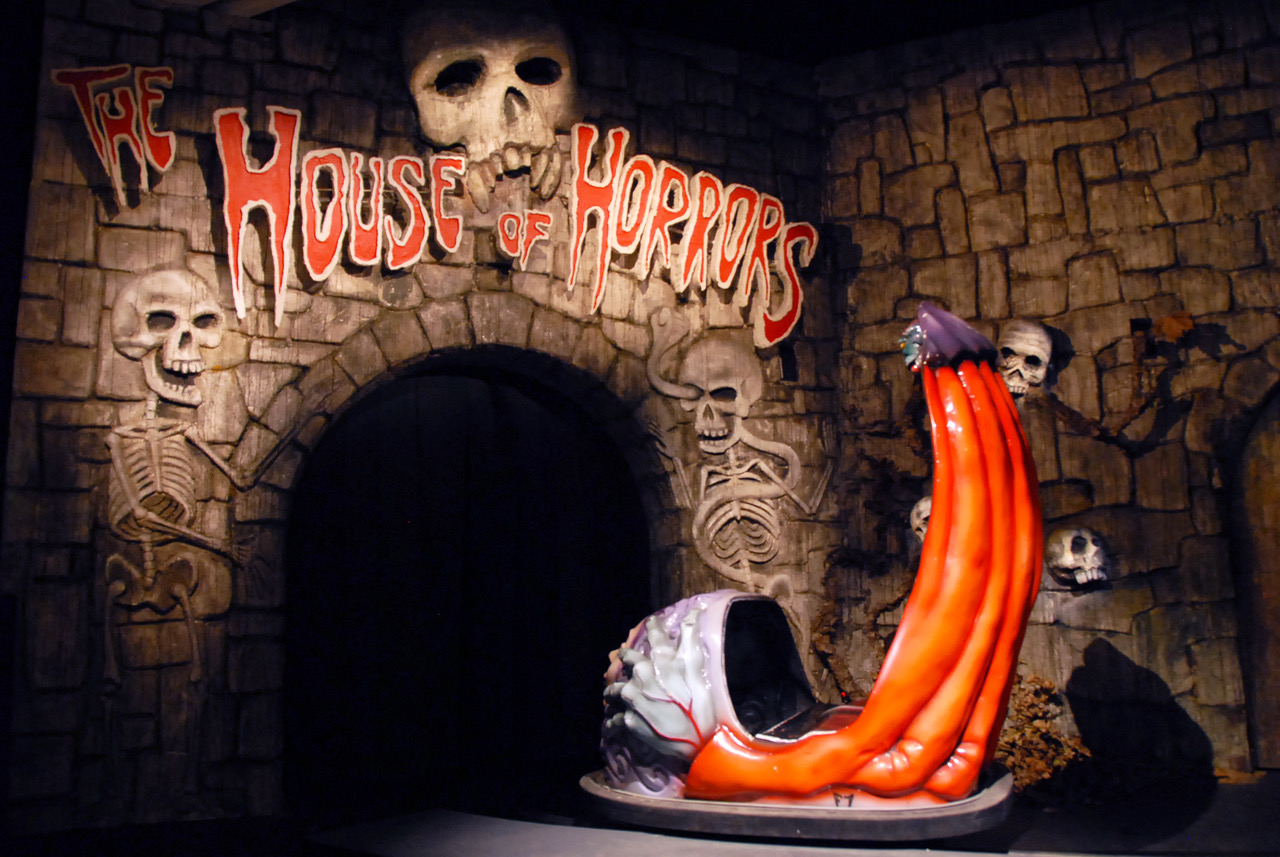
Johan-Brunel_House-of-Horrors_5.jpeg

DSC_0975-400x266.jpg

Screenshot 2025-05-29 at 4.51.44 PM.png

Vermassing {de-individualization}, Versteppung {to turn into steppes}, Einmaligkeit {uniqueness}, Untermenschentum {subhumanity} etc. – they have all been appropriated from somewhere, yet they are also all new, and will remain forever part of the LTI, because they all entered the common language from secluded corners of intimate, technical or group-specific usage and were contaminated through and through with Nazi ideology.

He never grew out of his initial childish and infantile attitude to the Jews. Herein lies a considerable part of his strength, because it unites him with the dullest section of the population, which, in the age of the machine, is plainly not made up of the industrial proletariat, nor does it consist exclusively of the peasantry, but rather derives from the concentrated masses of the petty bourgeoisie. For them anyone who dresses differently or speaks differently is not simply a different person, but a different animal from a different sty with whom there can be no accommodation, and who must be hated and hounded out. Race, as a scientific and pseudo-scientific concept, only appeared in the middle of the eighteenth century. But as a feeling of instinctive antagonism towards anything foreign, a tribal animosity towards it, the sense of race belongs to the earliest stage of human development; it is overcome at the point where the individual horde of people learns to regard the neighbourhing horde as an entirely different pack of animals.

If you base antisemitism on the notion of race, you don’t only give it a scientific or pseudo-scientific foundation, but also a basis in traditional folk history {eine ursprünglich volkstümliche Basis} which makes it indestructible: because a man can change his coat, his customs, his education and his belief, but not his blood.

Had the Führer really achieved his aim of exterminating all the Jews, he would have had to invent new ones, because without the Jewish devil – ‘anyone who doesn’t know the Jew ,doesn’t know the devil’ it said in the Stürmer display cases – without the swarthy Jew there would never have been the radiant figure of the Nordic Teuton. Incidentally, the Führer would not have had any great difficulty inventing new Jews, given that the English were repeatedly referred to by Nazi authors as descendants of the lost biblical lineage of the Jews. 
Hiterl’s fanatical guile is demonstrated by his perfidious and shamelessly blatant instructions to the propagandists of the Party. The golden rule is always: don’t let your listeners engage in critical thought, deal with everything simplistically!  When referring to various enemies, some people could jump to the conclusion that you, the individual, are perhaps in the wrong – the answer is to reduce everything to a common denominator, bracket everything together, show them the common ground!

ultimately 1 September didn’t bring about anything new, only a continuation of the murderous Jewish attacks on Hitler’s Germany, and we, the peace-loving Nazis, are only doing what we have done up to now – defending ourselves: since this morning ‘we are returning enemy fire’ as our first war bulletin puts it.

Racially motivated antisemitism, for Hitler initially a feeling resulting from his own primitiveness, is the central concern of Nazism, well thought-out and carefully developed into a coherent system, right down to the last detail. In Goebbels’s Kampf um Berlin (Battle for Berlin) there is the following passage: ‘You could describe the Jew as a repressed inferiority complex made flesh. This is why the best possible way to sting him is to refer to him by his real name. Call him a wretch, rogue, liar, criminal, murderer or killer. Beneath the surface he will barely be affected. But look him straight into the eye long and hard and then say: you’re a Jew aren’t you! And you will amazed to discover that he immediately looks insecure, embarrassed and guilty . . . ‘ A lie (this it has in common with a joke) is all the more effective, the more truth it contains. Goebbels’s observation is accurate, but for the mendacious word ‘guilty’. Someone spoken to in this way would not become aware of any guilt, but his previous security would turn into total helplessness, because the ascertainment of his Jewishness would cut the ground from under his feet and deny him any chance of mutual understanding, or of fighting a battle as an equal.

With great insistence and a high degree of precision right down to the last detail, Hitler’s Mein Kampf preaches not only that the masses are stupid, but also that they need to be kept that way and intimidated into not thinking. One of the main means of doing this is to hammer home incessantly the same simplistic lessons, ones which cannot be contradicted from any angle. And think how many threads there are connecting the soul of the (invariably isolated) intellectual to the masses that surround him!

photo_2025-05-31 00.01.00.jpeg

If a piece of news seemed dubious, it came from the Mundfunk {mouth radio} of the JMA, which stood for Jüdische Märchenagentur {Jewish Fairy-tale Agency}. 

Grünbaum is the best when it comes to telling Jewish jokes and anecdotes, he is tireless and invaluable, he shortens the day, he helps us cope with the worst depressions.

It was entirely impossible to take off the Jewish spectacles, one saw every occurrence and every report through them, and read every book through them. The only problem was the spectacles kept changing. At the outset, and then for a long time, the lenses showed everything cloaked in a rose-tinted mantle of hope. ‘It’s not half as bad as it looks!’ Many a time I heard this comforting expression when I took the reports in the military despatches of victories, and the number of enemy soldiers captured, inconsolably serious. But then, when things really were going badly for the Nazis, when they could no longer cover up their defeat, when the Allies approached the German borders and then crossed them, when city after city was pounded by enemy bombs – only Dresden seemed to be taboo – it was at that point that the Jews swapped their lenses. The fall of Mussolini was the last day they saw with the old glasses. But when the war continued, their confidence was shattered and turned into its very opposite. They no longer believed in the imminent end of the war, against all evidence to the contrary they believed the Führer must have magic powers, more magical than those of his increasingly doubtful followers. 
We sat in the Jewish cellar of our Jews’ House, which also contained a special Aryan cellar; it was shortly before Dreden’s day of catastrophe. We sat through the full-scale alert bored and shivering rather than frightened. From experience we knew that nothing ever happened to us, the raid was undoubtedly directed again at the tormented city of Berlin. We were less depressed than we had been for a long time; during the afternoon my wife had bene listening to London with loyal Aryan friends, moreover, and indeed most importantly, she had got to know Thomas Mann’s last speech, a beautifully humane speech certain of victory. We are not normally very receptive to sermons, they tend to put us in a bad mood – but this one was truly uplifting.
I wanted some of my good mood to rub off on my fellow sufferers, I moved from one group to the next: ‘Have you heard today’s bulletin? Do you know Thomas Mann’s latest speech?’ Everywhere I was rebuffed. Some of them were afraid to talk about forbidden matters: ‘Keep it to yourself, I don’t want to end up in a concentration camp.’ The others were embittered: ‘And even if the Russians are on the edge of Berlin,’ Steinitz said, ‘the war will still go on for years, anything else is hysterical optimism!’
For years we had divided people up into optimists and pessimists as if we were two separate races. In response to the question ‘What type of person is he?’ you always got the answer ‘He is an optimist’ or ‘He is a pessimist’, which from the mouth of a Jew was of course synonymous with ‘Hitler will fall very soon’ and ‘Hitler will hold his ground’. Now there was nothing but pessimists. Frau Steinitz went one better than her husband: ‘And even if they do take Berlin it won’t make any difference. All that will happen is that the war will continue in Upper Bavaria. For three years at least. And it doesn’t make any difference to us whether it’s three or six years. We won’t survive it anyway. It’s time you finally broke your old Jewish spectacles!’
Three months later Hitler was a dead man and the war was over. But it is true, the Steinitzes, and many others who sat with us that evening in the Jewish cellar, didn’t survive it. They lie buried under the ruins of the city.

‘Since the Umbruch?’ – Do you frown on that as well? But you are definitely wrong about that one. It’s a beautiful, poetic word, it has the fragrance of freshly ploughed fields, it can’t have been invited by those Hitler people, it must come from somewhere in the George circle.’ – ‘Certainly, but the Nazis have taken it over because it goes so well with “blood and soil”, and the “glorification of the sod {Verherrlichung der Scholle}” and “being rooted to the soil {Bodenständigkeit}”, they have infected it so much by touching it with their filthy hands that for the next fifty years no decent person . . . ‘

Here his bitterness expressed itself in a strange way. He appropriated all of the Nazis’ anti-Jewish expressions, and especially those of Hitler, and uttered them so incessantly that he himself could probably no longer judge to what extent he was ridiculing either the Führer or himself, or whether this self-deprecating way of speaking had simply become second nature.

The language of the victor . . . you don’t speak it with impunity, you breath it in and live according to it.

c4bee24d-a921-4ddf-af1a-77a4f727bccf_4000x3000.jpeg

IMG_0562 2.jpeg

Screenshot 2025-05-31 at 5.32.21 PM.png

IMG_9034.PNG

IMG_1708 2.jpeg

But Hitler spent his years as an apprentice in Austria, and in the same way as he introduced ‘Verlautbarung {announcement}’ from over there into the officialese of the German Reich, so he must also have picked up Herzl’s ways of thinking and speaking – it is almost impossible to locate the crossover from the one to the other, especially in the case of primitive types – assuming that they were present in him at all. Shortly after these discussions and reflections, Seliksohn brought me two volumes of Herzl, the Zionist writings and the first volume of the diaries, both published, in 1920 and 1922, by the Jewish Publishing House in Berlin. I read them with a dismay bordering on despair. My first diary entry on them reads: ‘Lord protect me from my friends! If you are in the right frame of mind, then these two volumes can provide evidence for many of the accusations levelled at the Jews by Hitler and Goebbels and Rosenberg, it does not require any great gift of interpretation or distortion.’ 

‘I watched and listened (he notes after a successful mass meeting) as my own legend came into being. The people are sentimental; the masses don’t see clearly. Even now they don’t have a clear impression of me. A light mist is beginning to well up around me which will perhaps become the cloud in which I move.’ Propaganda is to be made by all possible means: while one can deal with the childlike masses with orthodoxy and places of pilgrimage, in assimilated and educated circles it is possible to ‘create propaganda for Zionism out of snobbery’, mentioning for example Börries von Münchhausen’s ‘Ballads of Judah’ and Mosche Lilien’s illustrations when talking to the Viennese women’s association. 

And again and again the personal affinity, the linguistic accord of the two of them. One should count the number of receptions, speeches and trivialities of the Hitler regime that were referred to as ‘historic {historisch}’. And when Herzl advances his thoughts to the editor-in-chief of the Neue Freie Presse during a walk it is ‘an historic hour’, and whenever he enjoys the most insignificant diplomatic success it immediately goes down in world history. And there is a moment at which he confides in his diary that his private life has now ceased and his historic life begun . . . 
Again and again correspondences between them – intellectual and stylistic, psychological, speculative, political, and how much they mutually encouraged each other! Of all the things on which Herzl bases his idea of a unified people, there is only one which truly fits the Jews: their common opponent and persecutor; seen from this point of view the Jews of all nations certainly unite into ‘global Jewry’ in their opposition to Hitler – the man himself, his persecution complex and the precipitous cunning of his mania gave a concrete form to that which previously had only existed as an idea, and he converted more supporters to Zionism and the Jewish state than Herzl himself. And Herzl once again – from whom could Hitler have gleaned more crucial and practical ideas for his own purposes? 

It is undoubtedly the case that Nazi doctrine was repeatedly stimulated and enriched by Zionism, but it will not be easy in every case to say with certainty what the Führer and any of the co-authors of the Third Reich took specifically from Zionism. 

A stylistic affinity between Rosenberg and Buber, a kinship in certain values – cherishing farming and mysticism above nomadism and rationalism is also at the heart of Rosenberg’s thinking – isn’t this even more disturbing than the affinity between Hitler and Herzl? The explanation for this phenomenon is, however, the same in both cases: Romanticism, not only of the kitschy kind, but also the real one, dominates the period, and the innocent and the mixers of poison, the victims and the henchmen, both draw on this same source. 

Once in my life, about forty years ago, I published something in an American paper. To mark the seventieth birthday of Adolf Wilbrandt, the German-language New-Yorker Staatszeitung published an essay by me, his biographer. On seeing the specimen copy I immediately got a comprehensive impression of the American press, one which has stayed with me ever since. Probably unjustly, indeed definitely so because generalizations always falsify, and despite knowing this fact, the same image inevitably returns to me with utter clarity whenever I have reason to think of the American press, and regardless of how tenuous the association may be. Right down the middle of my Wilbrandt article, from top to bottom, there was a sinuous line cutting the type in two and advertising a laxative, it began the advertisement with the words ‘a man has thirty feet of intestines’. 
That was in August 1907. I never thought more deeply about these intestines than in the summer of 1937. Following the Nuremberg Rally it was reported that a column made up of all the German newspapers published on that day would reach 20 km into the stratosphere – which proved that the claims from abroad that the German press was in decline were nothing but lies; and around the same time, when Mussolini visited Berlin, it was reported that the festive decoration of the streets required 40,000 metres of bunting. 
‘A confusion of quantity and quality, an Americanism of the crudest kind’, I noted at the time, and the fact that the newspaper people of the Third Reich were quick to learn from the Americans was demonstrated by the increasing use of headlines in ever thicker type, and the increasing omission of the article preceding the noun that was being highlighted – ‘“Völkischer Beobachter” Builds World’s Biggest Publishing House’ – thereby compounding the strict concision favoured by the military, sport and business. 
But did the Americans and the Nazis really go in for the same kind of intemperance when it came to numbers and figures? I already had my doubts at the time. Wasn’t there a bit of humour in the thirty feet of intestines, couldn’t one always sense a certain straightforward naivety in the exaggerated figures of American adverts? Wasn’t it as if the advertiser was saying to himself each time: you and I, dear reader, derive the same pleasure from exaggeration, we both know how it’s meant – so I’m not really lying at all, you subtract what matters and my eulogy isn’t deceitful, it simply makes a greater impression and is more fun if it’s expressed as a superlative! 

It may well be that the LTI learned from American customs when it came to the use of figures, but it differs from them hugely and twice over: not only through exorbitant use of the superlative, but also through its deliberate maliciousness, because it is invariably and unscrupulously intent on deception and benumbing. In the Wehrmacht despatches unverifiable figures are strung together one after another detailing spoils and prisoners of war; artillery, planes and tanks are listed by the thousand and ten thousand, prisoners by the hundred thousand, and at the end of the month one is presented with immense lists of even more implausible figures; when it comes to the number of enemy dead, however, the precise figures disappear entirely, and are replaced by expressions of a faltering imagination: ‘unimaginable {unvorstellbar}’ and ‘countless {zahllos}’. During the First World War we were proud of the sober exactitude of the military despatches. The coquettish modesty of one particular sentence from the first days of the war became famous: ‘The stipulated line has been reached.’ of course it wasn’t possible to stay as sober as this, but it remained a stylistic ideal to aspire to, and this ideal never became entirely ineffective. The bulletins of the Third Reich, on the other hand, start off in a superlative mode from the very outset and then, the worse the situation, the more they overdo it, until everything becomes literally measureless, twisting the fundamental quality of military language, its disciplined exactitude, into its very opposite, into fantasy and fairy-tale. The fairy-tale quality of the figures detailing spoils is underlined by the fact that there is barely any reference to Germany’s own losses, just as in the images of battle which appear in films the bodies piled up in mounds are always enemy losses. 

The extraordinary thing was the shameless transparency of the lies revealed by the figures; one of the fundamentals of Nazi doctrine is the conviction that the masses are unthinking and that their minds can be completely dulled. In September 1941 a military despatch reported that 200,000 people were trapped in Kiev; a few days later 600,000 captives were freed from the same encircled area – presumably they were now adding the entire civilian population to the soldiers. In the past, people in Germany liked to laugh about the extravagance of East Asian figures; during the last years of the war it was shocking to see how Japanese and German reports tried to surpass each other in the most senseless exaggerations; it makes you wonder who learned from whom, Goebbels from the Japanese or vice versa. 

Sometimes smaller figures are also impressive. In November 1941 Ribbentrop declares that we could continue to fight for a further thirty years; on 26 April 1942 Hitler says in the Reichstag that Napoleon fought in Russia in temperatures of minus 25 degrees, but that he, Commanding Officer Hitler, had fought at minus 45, even at minus 52. unintended humour apart, this attempt to outdo an illustrious precursor – it was the period when he still liked to be celebrated as a strategist and have himself compared with Napoleon – seems to me to be extremely similar to the American custom of breaking records. 
Tout se tient as the French say, everything hangs together. The expression ‘hundertprozentig {100 per cent}’ comes directly from America and goes back to the title of a novel by Upton Sinclair which was widely read in German translation; throughout the twelve years it was on everybody’s lips and I often heard the adjunct ‘Steer clear of that chap, he’s a 150-per-center!’ and yet, it is precisely this most indisputable of Americanisms that has to be set against that most basic demand and keyword of Nazism – ‘total’. 
‘Total’ is also a number of maximum value, and, in its concrete reality, as pregnant with meaning as the romantic excesses of ‘zahllos’ and ‘unvorstell-bar’. The terrible consequences for Germany itself of the total war that it declared as part of its own programme are still fresh in everyone’s mind. But it is not only in relation to the war that one comes across the ubiquitous ‘total’ in the LTI: an article in the Reich extols the ‘total learning environment’ in a rigidly Nazi girls’ school; in a shop window I saw a board game described as ‘the total game’. 
Tout se tient. As well as being allied to the principle of totality, the numerical superlatives also encroach on the domain of religion, and one of the fundamental assertions of nazism is that it is a Teutonic religion taking the place of the Semitic and unheroic religion of Christianity. Ewig {eternal, everlasting}, the religious elimination of duration, is often used – the eternal guard, the eternal existence of Nazi institutions – and the ‘Thousand Year Reich’, an even more conspicuously ecclesiastical and religious name than the Third Reich, is referred to often enough. of course the round number 1,000 is also popular outside the realm of religion: propaganda rallies intended to raise the spirits for 1941, following the absence of a decisive outcome to the Blitzkrieg, are immediately advertised as a thousand. 

In addition to the numerical superlatives and the number-like words, three different usages of the superlative can be distinguished, all three of which are used equally excessively: the regular superlative forms of adjectives, single expressions which inherently contain a superlative value or can have one ascribed to them, and sentence structures completely drenched with superlatives. 
The regular superlatives can acquire a special appeal through the effect of accumulation. When I Nazified the elephant joke earlier, I had a sentence ringing in my ear which Generalissimo Brauchitsch used at the time to spice up military commands: the best soldiers in the world are supplied with the best weapons in the world produced by the best workers in the world. 
Here, alongside the regular superlative form, is the word filled with superlative meaning which the LTI uttered day in day out. When, on very special occasions, courtly writers solemnly extolled the fame of the Sun King in the florid style of the seventeenth century, they said that l’univers, the universe, looked down on him. In every speech and every remark of Hitler’s throughout the twelve years – because it was only at the very end that he fell silent – the same headline always appears as a compulsory cliché: ‘The World Listens to the Führer.’ Whenever a major battle is won it is ‘the greatest battle in the history of the world’. ‘Battle’ on its own is rarely sufficient, it is ‘battles of total destruction {Vernichtungschlachten}’ that are fought. (Once again the shameless reliance on the forgetfulness of the masses: how often the same enemy, already pronounced dead, is destroyed once more!) 

This curse clings to it of necessity in every language. Because wherever you are, constant exaggeration is always bound to lead to ever greater exaggeration, with the result that a dulling of the senses, scepticism and finally disbelief are inevitable. That is doubtless the case everywhere, but some languages are more receptive to the superlative than others: in Romania, in the Balkans, in the Far East and probably also in North America – in all of these countries a bigger dose of the superlative can be tolerated than with us, and what in our case indicates a fever, is often nothing more than a pleasant rise in temperature. Perhaps this is precisely the reason, or at least a further reason, why the superlative crops up with a vengeance in the LTI; epidemics are supposed to spread like wildfire in places they assail for the first time. 
Now it could, of course, be said that Germany had already suffered this linguistic disease once before: in the seventeenth century under the influence of Italy and Spain; but the bombast of that period was harmless, devoid of any of the poison of deliberate mass seduction. 
The malignant superlative of the LTI is a new phenomenon in Germany, which is why it has such terrible consequences from the outset, and this is also why it is compelled by its own nature to push itself so far that it becomes meaningless and utterly ineffective, finally bringing about a belief in the very opposite of what it intended. How often I noted down in my diary that some sentence or other of Goebbels’s was far too crude a lie, that the man was definitely no advertising genius; on numerous occasions I noted down jokes about Goebbels’s big mouth and his effrontery, and on numerous occasions recorded bitter invective about his barefaced lies as ‘the voice of the people’ from which hope could be drawn. 
But there is no vox populi, only voci populi, and it can only be ascertained in retrospect which of these various voices is the true one – I mean the one which determines the course of events. And even then it can’t be said with absolute certainty that all those who laughed at Goebbels’s all-too blatant lies actually remained unmoved by them. On countless occasions during my spell as an assistant in Naples I heard people say about some newspaper or other: è pagato, it’s paid for, it lies for its client, and then on the following day these very same people who had cried pagato were absolutely convinced by some obviously bogus piece of news in the same paper. Because it was printed in such bold type, and because the other people believed it. In 1914 I persuaded myself calmly each time that this was a result of the naivety and the temperament of the Neapolitans, after all Montesquieu had written that Naples was more ‘of the people’ than anywhere else, plus peuple qu’ailleurs. Since 1933 I have known incontrovertibly something I had suspected to be the case for a long time and not wanted to admit, namely that it is easy to cultivate such a plus peuple qu’ailleurs anywhere; and I also know that a part of every intellectual’s soul belongs to the people, that all my awareness of being lied to, and my critical attentiveness, are of no avail when it comes to it: at some point the printed lie will get the better of me when it attacks from all sides and is queried by fewer and fewer around me and finally by no one at all. 
No, it’s not as simple with the curse of the superlative as logic would have one believe. Certainly, bragging and lies come thick and fast and are finally recognized for what they are, and for some people Goebbels’s propaganda ultimately became ineffective inanity. But it is also undeniable that the propaganda exposed as bragging and lies still works if you only have the audacity to continue with it as if nothing had happened; the curse of the superlative is not always self-destructive, but all too often destroys the intellect which defies it; and Goebbels had much more talent than I gave him credit for, and the ineffective inanity was neither as inane nor as ineffective. 

R0005651.jpeg

R0005652.jpeg

R0005629.jpeg

R0005630.jpeg

R0005642.jpeg

R0005631.jpeg

R0005633.jpeg

R0005634.jpeg

R0005637.jpeg

R0005641.jpeg

R0005607.jpeg

R0005609.jpeg

R0005597.jpeg

IMG_1709.jpg

Everyone is endowed with reason… 
…But when they lose rationality, they become invincible.

The azaleas in the garden remember to bloom every year 

HuiAn_-_Zishan_Town_-_P1230107.jpeg

Screenshot 2025-06-04 at 3.42.04 PM.png

Screenshot 2025-06-04 at 3.47.51 PM.png

Screenshot 2025-06-04 at 5.14.16 PM.png

bafkreigd3s7czlfywrb5uqgbno6vuqtt3p7sjlnqdbi5kzzyjay4ychfjm.jpg

IMG_2648.jpg

bafkreigsjkenn3o76uy4zktuurc6kmuutfv3envj43wzttqf4bdqrwnubu.jpg

photo_2025-06-07 23.22.53.jpeg

photo_2025-06-08 22.04.12.jpeg
Today I can still remember how this smile and the happy ring to his voice highlighted the word ‘Europe’; because today I received from the Bls the first news since they emigrated. In the meantime they must have made it to Lima since their letter was sent from Bermuda. I find it very depressing: I am envious of these people’s freedom, the broadening of their horizons, I am jealous of him because of the chances he has to influence people – and instead of just being happy they complain about seasickness and being homesick for Europe. I have knocked off a few lines of verse to send them: Thank the Lord with all your might For furnishing your means of flight Across the sea from grief and fright – To where your woes are truly small; To spew a little in the sea From a ship that cruises free Is hardly worth a word at all. Lift your weary eyes to view The Southern Cross beyond the blue; Far from all the woes of the Jew your ship has bridged the ocean. Do you yearn for Europe’s shore? It greets you in the tropics more For Europe is a notion! Today I ask myself again the same question I have asked myself and all kinds of people hundreds of times; which was the worst day for the Jews during those twelve years of hell? I always, without exception, received the same answer from myself and others: 19 September 1941. From that day on it was compulsory to wear the Jewish star, the six-pointed Star of David, the yellow piece of cloth which today still stands for plague and quarantine, and which in the middle ages was the colour used to identify the Jews, the colour of envy and gall which has entered the bloodstream; the yellow piece of cloth with ‘Jew’ printed on it in black, the word framed by the lines of the two telescoped triangles, a word consisting of thick block capitals, which are separated and given broad, exaggerated horizontal lines to effect the appearance of the Hebrew script. The description is too long? But no, on the contrary! I simply lack the ability to pen precise, vivid descriptions. Many was the time, when it came to sewing a new star onto a new piece of clothing (or rather an old one from the Jewish clothing store), a jacket or a work coat, many was the time that I would examine the cloth in minute detail, the individual specks of the yellow fabric, the irregularities of the black imprint – and all of these individual segments would not have been sufficient, had I wanted to pin an agonizing experience with the star on each and every one of them. A man who looks upright and good-humoured comes towards me leading a young boy carefully by the hand. He stops one step away from me: ‘Look at him, my little Horst! – he is to blame for everything!’. . . A well-groomed man with a white beard crosses the road, greets me solemnly and holds out his hand: ‘You don’t know me, but I must tell you that I utterly condemn these measures.’ . . . I want to get onto the tram: I am only allowed to use the front platform and then, only if I am travelling to the factory, and only if the factory is more than 6 kilometres from my flat, and only if the front platform is securely separated from the inside of the tram; I want to get on, it’s late, and if I don’t arrive punctually at work the boss can report me to the Gestapo. Someone drags me back from behind: ‘Go on foot, it’s much healthier for you!’ an SS officer, smirking, not brutal, just having a bit of fun as if he were teasing a dog . . . my wife says: ‘It’s a nice day and for once I haven’t got any shopping to do today, I don’t have to join any queues – I’ll come some of the way with you!’ – ‘Out of the question! Am I to stand in the street and watch you being insulted because of me? What’s more: who knows whether someone you don’t even know will get suspicious, and then when you are getting rid of my manuscripts you’ll accidentally bump into them!’ . . . A removal man who is friendly towards me following two moves – good people with more than a whiff of the KPD – is suddenly standing in front of me in the Freiberger Straße, takes my hand in both of his paws and whispers in a tone which must be audible on the other side of the road: ‘Well, Herr Professor, don’t let it get you down! These wretched brothers of ours will soon have reached rock bottom!’ This is meant to comfort me, and it certainly warms the heart; but if the wrong person hears it over there, my consoler will end up in prison and it will cost me my life, via Auschwitz . . . A passing car brakes on an empty road and a stranger pokes his head out: ‘You still alive, you wretched pig? You should be run over, across your belly! . . .’ No, the individual segments would not be sufficient to note down all the bitterness caused by the Jewish star. This section is full of official expressions and terms which were familiar to those at whom they were directed, and who used them constantly in conversation. It started off with ‘non-Aryan’ and ‘to aryanize’, then there were the ‘Nuremberg Laws for the Preservation of the Purity of German Blood’, followed by the ‘full Jews’ and ‘half-Jews’ and ‘mixed marriages of the first degree’ and other degrees, and ‘Jewish descendants {Judenstämmlinge}’. and, most importantly, there were the ‘privileged {Privilegierte}’. This is the only invention by the Nazis where I am not certain whether the authors were fully aware of the diabolic nature of their contrivance. The privileged only existed amongst groups of Jewish factory workers: the preferential treatment they received consisted of not having to wear the star or live in the Jews’ house. Someone was privileged if they lived in a mixed marriage and had children from this marriage who were ‘brought up as Germans’, which means they were not registered as members of the Jewish community. Perhaps this section, which in action repeatedly led to inequalities and grotesque hairsplitting, was really only created in order to protect sections of the population deemed useful to the nazis; but in practice nothing was more divisive and demoralizing for the Jewish population than this regulation. And how much envy and hatred it provoked! There are few sentences that I have heard uttered more frequently and with more bitterness than this one: ‘He is privileged.’ It means: ‘He pays lower taxes than we do, he doesn’t have to live in the Jews’ house, he doesn’t wear the star, he can almost drop out of sight . . .’ And how much arrogance, how much pathetic gloating – pathetic because ultimately they were in the same hell as we were, albeit in a better district of hell, and in the end the gas ovens devoured the privileged as well – how much emphatic distance was couched in the three words ‘I am privileged’. Now, when I hear of accusations levelled by one Jew at another, of acts of revenge with serious consequences, my first thought always turns to the universal conflict between those who bore the star and the privileged. Of course in the cramped living conditions of the Jews’ house – shared kitchen, shared bathroom, shared hall for different groups – and the close-knit groups of Jewish workers in the factories, there were innumerable other sources of friction; but it was the distinction between privileged and non-privileged which ignited the most poisonous resentments, because what was at stake was the most loathed thing of all, the star. Again and again, and with only minor variations, I find sentences in my diary such as the following: ‘All the worst characteristics of people come to light here, it’s enough to make you an antisemite!’ From the second Jews’ house onwards, however – I got to know three – outbursts of this kind are always accompanied by the rider: ‘It’s a good thing that I have now read Dwinger’s Die Armee hinter Stacheldraht (The Army Behind Barbed Wire). The people herded together in the Siberian compound of the First World War are not Jews at all, they are racially pure Aryans, German military men, German officers, yet what happens in this compound is exactly the same as what happens in our Jews’ house. It has nothing to with race or religion, it is the herding and the enslavement . . .’ ‘Privileged’ is the second worst word in the Jewish section of my lexicon. The worst remains the star itself. Sometimes it is viewed with gallows humour: I am wearing the Pour le Sémite is a widespread joke; sometimes people claim not only to others, but also to themselves, that they are proud of it; right at the very end people pinned their hopes on it: it will be our alibi! But for most of the time its shrill yellow illuminates the most agonizing of thoughts. And the ‘covered star’ phosphoresces more poisonously than any other. According to Gestapo regulations the star has to be worn uncovered, above the heart, on the jacket, on the coat, on the work coat, it must be worn at any place where there is the possibility of an encounter with Aryans. If you open up your coat on a humid day in march so that the coat flap is folded back over your chest, if you carry a briefcase under your left arm, if as a woman you wear a muff, then your star is covered, perhaps unintentionally, and only for a few seconds, or perhaps even intentionally so that just for once you can walk the streets without stigma. A Gestapo officer will always assume that you intended to cover the star, and the punishment is the concentration camp. And if a Gestapo officer wants to demonstrate his zeal, and you cross his path, then the arm carrying the briefcase or wearing the muff may as well be hanging right down to your knees, and it doesn’t matter how correctly the coat is buttoned up: the Jew Lesser or the Jewess Winterstein has ‘covered up the star’, and, within three months at the most, the community will receive a formal death certificate from Ravensbrück or Auschwitz. It will state the cause of death precisely, even with variations and an individual touch; it may say circumspectly ‘died of an inadequate cardiac muscle’ or ‘shot attempting to escape’. But the real cause of death is the covered star. The English Arts and Crafts movement re-animated indigenous northern building styles, gardening traditions, decorative and home making practices, and craft forms. Promoting an integrative architectural approach to the decorative and household arts, and a merging of aesthetic appreciation and pedagogy into every aspect of domestic life, the early proponents of the Arts and Crafts movement coined the notion of lifestyle as a distinct aesthetic category and a commodity. Where the rural working class was seen to have a daily life, with all of that term’s connotations of repetition, boredom, custom, and work, the aesthetic classes adapted from them stylistic tropes and material practices, collaging from these borrowings a ‘lifestyle’ which bore the signs and accessories of rural authenticity and the privileged agencies of moneyed choice. But in the movement’s early stages, a vigorous anti-capitalist ideology motivated the new design aesthetic. In ‘Making the Best of It,’ one of his many published lectures on design philosophy, William Morris promoted his ‘lurking hope to stir up both others and myself to discontent with and rebellion against things as they are, clinging to further hope that our discontent may be fruitful and our rebellion steadfast, at least to the end of our own lives, since we believe that we are rebels not against the laws of Nature, but the customs of folly. For Morris, ‘the customs of folly’ were competitive commerce and the division of labour. He intended the Arts and Crafts to ameliorate the alienation of workers from ‘the field of human culture’ by reconstructing a holistic productive environment for objects that would bear their maker’s full intelligence, imagination, and skill. Workers needed not only money, but also leisure and art and praise. Morris’s utopian rhetoric flowed; he anticipated the day that would bring ‘the visible token of art rising like the sun from below – when it is no longer a justly despised whim of the rich, or a lazy habit of the so-called educated, but a thing that labour begins to crave as a necessity, even as labour is a necessity for all men …’ The new movement strove to reinhabit (one is tempted to say redecorate) an English radical workers’ history extending from Watt Tyler and Cromwell to Marx; but Morris’s was to be a soft rebellion, implemented by art, rhetoric and consumption. Lifestyle became an ethical category. Nature was the pattern book for Arts and Craft ideology. As Morris expressed it, ‘what else can you refer people to, or what else is there which everybody can understand?’ His tone was not ironical. The Romantic movement of the eighteenth and early nineteenth centuries had constructed an idea of Nature as democratic and populist metaphor, the universal paradigm of sincerity and authenticity. Revolutionary ideals of nature became popular not only among a political and cultural elite, but through the growing middle-class reading public that was reached by the mass distribution of the new literature of Rousseau, Wordsworth and the English Romantics, and Goethe. The Romantics, in part through their decontextualization of vernacular and folk usages and contents, and their construction of new individualist metaphors of subjectivity, made a Nature that would function as foundation for aesthetic practice conceived as radical subjective agency. ‘Natural man is entirely for himself,’ Rousseau states in his pedagogical tract Emile. ‘He is numerical unity, the absolute whole which is relative only to itself or its kind. Civil man is only a fractional unity dependent on the denominator.’ Nature was reclaimed from the shifting artifices of eighteenth-century court pastoral, from ironic citational practices and equivocal interreferentiality, to serve the Romantic myths of ‘origin,’ ‘autonomy’ and ‘authenticity.’ The garden received the imprint of these contemporary ideals of nature. In England, garden design had developed into a richly coded practice that charted developing national ideals of nature and ‘the land.’ Through quotation of landscape painting and classical poetry, manipulation of plant materials, water and grade, and changing articulations of scale, enclosure and geometry, in images that ranged from the mannered and Italinate artifice of the baroque parterre to the gentle ruins and glowing distances of Claude Lorraine’s mythic landscapes, the gardens of English gentry expressed the movement of dominant cultural imaginations of nature towards the infinity of the neoclassical landscape. By the eighteenth century England was at the avant-garde of European garden design. A handful of gardeners – William Kent, Vanbrugh, Capability Brown – and their aristocratic patrons together dissolved the traditional boundaries and forms of the garden enclosure. They erased the geometrical symmetries of parterres and the visual obstruction of fences, and sometimes even villages, to construct for the huge country estates of the gentry and image of a benign mythic utopia, wherein, as Alexander Pope wrote in Windsor Forest, ‘order in variety we see, / And where, though all things differ, all agree.’ Fastidiously situated groves were reflected in the serpentine waters of artificial lakes; manors were aligned to views of recently constructed ‘ruins’; urns, statues and inscriptions quoted classical poets; house façades were refaced as classical temple porticoes; the countryside became a metaphor for a broad comparison of English and Greco-Roman practices of Empire. In compositional terms, William Kent elided the boundary between the garden as an enclosed space and the surrounding landscape, extending the designed vista to the horizon. The visual impression was of unbroken expanse, the vista replicating the unbroken power of aristocratic ownership. Capability Brown, Kent’s successor in landscape innovation, stripped the expanded landscape of extraneous cultural allusion, removing temples and other referential garden architecture. Brown’s minimalist expanses were composed only of elements: water, trees, land and horizon. Nature was reimagined as a field of abstract plastic forms whose sparse arrangement in heavily theorized curves and serpentines recalled the Burkean sublime. Brown blurred the representational finitudes of economy and perceptions of boundary to an unrestrained abstraction of smooth, green continuity, linking English and classical landscapes through the sophisticated restraint of his structural vocabulary, rather than through the plenitude of figural allusion. Brown’s garden was a canvas for reverie. The foreground was not a contested or problematic site; nor was the aristocratic dreamer. The rolling turf simply ended at the manor door. Looking out from the windows, all of nature appeared as one elegant and inherited composition, the horizon itself an allegory of pastoral, and national, infinity. Robinson’s plant naturalization techniques symbolically domesticated the rougher boundaries of the landscape, bringing forest, alpine and meadow pictures into the garden purview. Where previously landscaping had addressed the representational boundary between garden and agricultural landscape, Robinson represented the uncultivated wilderness as a garden. Now Nature aspired to the condition of presocial, Rousseauian wilds. In practical, horticultural terms Robinson contributed to a renewed general interest in hardy, nonhybrid plants and flowering bulbs. In The English Flower Garden, he held forth the cottage garden as a primitive design ideal, and plant source, for the old-fashioned flowers of English poetry and folklore. Engravings of vine-slung thatch gables and overgrown stone doorsteps accompanied a text that explained the practical economy of cottage-garden beauty. ‘Why should the cottage garden be a pictrue when the gentleman’s garden is not? The reason is, that one sees the plants and the vegetation not set out in any offensive geometrical or conventional plan … a plan should be subordinate to the living things.’ Robinson showed that ‘beauty’ was accessible to anyone who could root a cutting, enjoy a ‘wild’ picture, or appreciate and imitate the purportedly naïve aesthetics of the working class. Gardens were freed from the gentry. ‘The charm of simplicity and directness’ was within the compass of the middle class. ‘The site prescribes the character of the building; the building aims to be as it were a part of the site; and if the architect is obliged to call in a landscape architect to enable him to understand the possibilities of the site, it goes without saying that he must base his design upon the understanding thus received.’ When structure is increasingly expressed through sociality and use, rather than solely through materials, dwelling plays on an ephemeral architectural practice. Dwelling overlays and sometimes transforms the principled concepts of the designer. When Twizell left and the Ceperleys moved in, they brought with them a gardener, Mr. Legge, who tended and improved the family utopia. Snapshots reveal an inordinate fondness for terra cotta rabbits. bunnies dotted the serene slopes of the lawns. Potted palms flanked gravel walks in a throwback to the Victorian delight in plant exoticisms; a rock garden and lily pool with little bridge offered manageable domestications of picturesque ruggedness and changeability. Mr. Legge decked the good bones of Twizell’s modern structure with the superfluities and inconsistencies of untrained, nostalgic, human delight. And amidst the lovely misuses of modernism, a leisurely life of family entertainments, picnics and light gardening unfolded. In Jane Austen’s England, the dining room and the garden each requested a culturally appropriate mode of domesticity or recreation. The Arts and Crafts dearticulated and mirrored boundaries, rendering these two spaces as interchangeable social sites. ‘Lifestyle’ spilled across the opened structures of the home; lifestyle was itself the newest recreation in the Rousseauian Nature imagined by the Arts and Crafts garden: ‘The dining room would be everywhere – in the garden, in a boat, under a tree, or sometimes near a distant spring, on the cool, green, grass, beneath clumps of elder and hazel … We would have the lawn for our table and chairs; the ledges of the fountain would serve as our buffet table; and the dessert would hang from trees. The dishes would be served without order; appetite would dispense with ceremony.’ At Fairacres, the dining room windows were perhaps hung with William Morris’s popular chintz, ‘The Strawberry Thief.’ Out on the lawn, the furniture and silver shone under a sun ‘bright, but not oppressive.’ Arts and Crafts design infiltrated and domesticated the pastoral, overlaying the site with a specifically ethnic origin myth. If the spatial chronicle of the house and garden can be considered as the gradual discorporation of the propriety of the boundary or wall, perhaps the transient and beribboned rhetoric of the picnic is the most modern of architectures. Elliot suggests that in the idea of the humble cottage garden there was more nostalgic fantasy or false memory than historical evidence: ‘There is little evidence for the existence of cottage gardens before the end of the eighteenth century.’ (See Elliot, 63.) But gardens leave so little evidence that all garden historiography is in a sense a kind of Freudian dreamwork. In what season, through what representation or renovation, from what point in its development, with what persistently spreading perennial, may we retrospectively construct an image of what a garden was? And in its reimagining of nature, history and heritage, the garden itself is a constructed dream. Perhaps Freud and Jekyll’s pilgrimages to Italy ought to be considered as parallel journeys. The secret of improved plant breeding, apart from scientific knowledge, is Love. —Luther Burbank Baudelaire says art must be stupid. And I identify with that, maybe I would sort of use this term of ‘the possible’ rather than ‘the stupid’ but it’s very similar in saying that, you know, I agree with Baudelaire in saying that we don’t make art in order to express our supposed intelligence. We don’t write a poem to show how smart, you know, we are and how we have understood something, we write ‘cuz we don’t know what the hell is going on. We write it from a point of stupidity. And I think that anything is only interesting insofar as it begins from this point of stupidity and tries to remain in it and resists the often irresistible nature of cleverness. If architecture is entombed structure or thanatos, ornament is the frontier of the surface. It is at the surfce where lively variability takes place. The architect Gottfried Semper said of the biologist Cuvier’s display of comparative anatomy at Le Jardin des Plantes in Paris, ‘We see progressing nature, with all its variety and immense richness, most sparing and economical in its fundamental forms and motives. We see the same skeleton repeating itself continuously but with innumerable variations.’ The Office for Soft Architecture finds the chaos of variation beautiful. We believe that structure or fundament itself, in its inert eternity, has already been adequately documented—the same skeleton repeating itself continuously. We are grateful for these memorial documents. But the chaos of surfaces compels us towards new states of happiness. We concur with Ruskin, who in The Stones of Venice stated: ‘We have no more to do with heavy stones and hard lines; we are going to be happy: to look round in the world and discover (in a serious manner always however, and under. a sense of responsibility) what we like best in it, and to enjoy the same at our leisure: to gather it, examine it, fasten all we can of it into perishable forms, and put it where we may see it forever. In 1806, as Goethe wrote his Theory of Colours in Weimar, the city was occupied by Napoleon’s troops. In that year Napoleon had changed the colour of his army’s uniform from revolutionary blue to white. Russia had blocked the export of indigo to France. There was not enough blue dye to supply the army. In Weimar they marched in white uniforms with gilded buttons, a moving whitewashed corridor that prefigured Ruskin’s decorative assessment of whiteness and gilding. But white was poor for morale; it was too true and too sincere. At battle each soldier could read death on his fellow’s tunic. Within the year, Napoleon decreed a return to blue uniforms, on which blood and gore and battlefilth were less alarmingly visible. He began to promote the French cultivation of woad for use as a blue dyestuff in place of indigo. Goethe wrote, ‘We love to contemplate blue, not because it advances to us, but because it draws us after it,’ perhaps a more agreeable persuasive rhetoric for an army to perpetuate. But the soldiers had been required to purchase white coats, and these increasingly besmirched garments could not be eradicated from the ranks, which now appeared motley, impure, random. We wonder how white became so innocent. When Goethe claims for the colour white that in organic forms it tends to appear only in the interior, rather than on the surface, we think of the bones of a mammal or the pith of a stem. We think of Goethe’s whitewashed hallway, running through Benjamin’s dream like a spine. But affect can’t be controlled. White proposes a disciplinary unity and it always fails. It already submits to pigment and chance. We think that by dyeing our costumes and carrying our colourful objects and cosmetics we lend mobility to the plants and deny for a while each species’ propriety. The surface of us overlaps with other phyla. Walking and parading we mix the surface of the earth, though we might intend that march’s purpose as ordination. Colour marks exchange. It is border-work. Mixture is our calling. As a boy Sigmund Freud worshipped Heinrich Schliemann, the great archaeologist of Troy. Schliemann was a businessman who financed his excavations of the lost Homeric city by investing in the indigo trade during the Crimean War. Battlefield slaughter expanded the indigo market. The blue skin of imperial Europe supported the structural phantasy of origin. The archaeological metaphor called Troy—which informed Freud’s psychoanalytic fiction of a spatially structures consciousness – was financed by the movement of pigment across contested borders. Metaphor inflates an economy. Colour is structured like a market. Both colour and market are measured combinations of sentiment and emotion. A political economy appears to contain their instability, but at any moment this structure could be flooded by the randomness of affect. Plato and Aristotle thought paint or pigment was a drug or a pharmakon: an occult substance that, like poetry, could stimulate unaccountable change. They wished to excise it from the polis. The white wall is a phantasized exoskeleton, not so much a screen memory as a ghostly amnesia. Like the whitewashed mirage of an army, it dissolves as approached and the redundancy of mortal pigment emerges, shot through with sullied fragments. The ad hoc semantics of pigment scumble intention. The dichotomy of colour and pigment is false and therefore instructive. For Newton, of course, all colour joined in the pure concept of whiteness, of light. But we are attracted to the weakness and impurity of the bond of pigment, because we can identify with nothing other than instability. This identification is admittedly a style of taste, but it also improvises a political alignment. Repeatedly we have attempted to define colour for ourselves, although it is only with great difficulty that we depart from the sultry glamour of pigment. Between mysticism and glamour, we would rather not choose. We could say juice, or pigment, to indicate that aspect of the substance that travels across. Such juice is always psychotropic. It translates mentalities. We might say that pigment is that motion spontaneously produced by substance in conjunction with light. Dangerously pigment smears. Artifice is the disrespect of the propriety of borders. Emotion results. The potent surface leans into dissolution and disrupts volition – it’s not a secluding membrane or limit. To experience change, we submit ourselves to the affective potential of the surface. This it the pharmakon: an indiscrete threshold where our bodies exchange information with an environment. When we say juice, we mean a tinging juice, a juice which marks the surface through co-operation. Such a juice is to be found in the juice of ink, the red juice, things filled with a red juice, a concentrated juice. Armies run with juice. This juice has a property, this juice appears to be connected to phenomena. Pure red juices are common as are the juices with very rich and powerful hues. Some-thing yields a beautiful yellow juice. flowers and their juices are bleached by sulfur. The glamorous surface is nourished by perfect juices. When we want to produce something exciting, something alluring, we begin with pigment or juice. Colour differs from substance. Is colour always lyrics? We are not sure. It seems to consist of the detritus from natural history stuck into sentiment. For example, it is said that among humans, women are colourful. Nothing more needs to be said on this theme. We want to expose colour, bring it out of the boudoir, where colour and truth are always bickering. Colour itself speaks, so thankfully can’t be truth, which is silent and must be read. The polis is quite colourful. Each unaccountable surface ripples as if italicized. The eternal economy never wants to complete itself. Colour receives belief in the form of a name. ‘Blue.’ It literally attaches to the architecture, cracking and splitting around it like a shell or dangling from it like capital or savage ornaments or ideals or words. It attaches to consciousness. The name bloats and travels and drifts with arcane logics. It can appear as though colour, like an army, is made from memory and fear and lust. The names are public screens on which sentiment performs. When we walk in the inscription-splattered street we are interested to question the relation of surface to belief. This question defines our stance as citizens. Thinking about colour we open up a space in the surface, the potent space between substance and politics. A tiny freedom drifts there and we adore it. But our gluttony for the ethereal has not to do with fame or glamour or scale. Through gluttony we come to resemble history. Through gluttony we are indexical. Aristotle said that colour is a mixture of three things: ‘the light, the medium through which the light is seen, such as water and air, and thirdly, the colours forming the ground from which the light happens to be reflected.’ These remain useful differentiations. The medium is also an economy. Another way of saying this is that the triad of pigment, colour, medium always trembles, and could at any instant dissolve. The idea of unstable mixture remains essential to us. The notions of colour and pigment are mixed through as though marbled by their historical medium. Like the myth of the market, they must observed with ambivalence. When the baby is born there is no place to put it: it is born, it will in time die, therefore there is no sense in enlarging the world by so many miles and minutes for its accommodation. A temporary scaffolding is set up for it, an altar to ephemerality – a permanent altar. This altar is the Myth. The object of the Myth is to give happiness: to help the baby pretend that what is ephemeral is permanent. It does not matter if in the course of time he discovers that all is ephemeral: so long as he can go on pretending that it is permanent he is happy. – Laura Riding, Anarchism Is Not Enough The history of scaffolding has been dismantled. we can’t write this history because there are so few documents – only a slim sheaf of photographs. So we study the construction of the present and form theories. We use the alphabet as a ladder. Scaffolding, from scalado, to storm by mounting a wall by ladders. We believe that the object of architecture is to give happiness. For us this would mean the return of entropy and dissolution to the ephemeral. The architecture of happiness would rehearse a desanctification of time, which is itself only a scaffolding. We live on this temporary framework of platforms and poles, as diagrammed in the most rudimentary fashion by the letter ’t.’ All the ceremonies of transition take place on such a makeshift planking: judgements, executions, banquets and symposia, entertainments and recitals, markets and bazaars, funerals, births and weddings and illicit fuckings are rehearsed and performed to their witnesses on this transient stage, which is sometimes decorated with drapes or swags or flags or garlands, sometimes padded for the comfort of the performing body, sometimes left bare as if to state the plain facts of life. the scaffold is a pause, an inflection of passage It accommodates us in a shivering. Planks for scaffolding should be carefully inspected and tested. Men might spring on the plaks or tap them for sound. these tests are not likely to injure a good plank. Photographs of special scaffolds and other rigging interest us. In preparation for the photograph the men should arrange themselves on the scaffold as in a frieze, standing with their various brimmed hats against the sky, or sitting swinging their legs from a more supple plank with the hacked forest behind them or the bare place that will become the city. We find such an image quite attractive. Firstly, a scaffold lists, in every way. List, as in a record, a number, a law, a row or rows; to enter, to register, to enlist; a method, a border or bordering strip, a salvage, a strip of cloth, a stripe of colour, a ridge or furrow of earth; to produce furrows or ridges; a careening or leaning to one side, as a ship; to be pleasing, to desire, to lust. To list a narrow fillet. Listless. Enlisting cloth. A stuttering. A conceptual limp. Scaffolding is analogy. It explains what a wall is without being a wall. Perhaps it describes by desiring the wall, which is the normal method of description. But also the scaffold wants to fall away from support. Its vertigo is so lively. The style of fidelity of scaffolding is what we enjoy. It finds its stabilities in the transitions between gestures. Rumour has it that the same designer once drew plans of temporary supporting structures alongside those of the permanent edifices. The story can be illustrated by the working drawings of ancient masonry bridges accompanied by their designated falsework. Now scaffolding floats freely, detached from the severity of an origin. It is a system, not an organism. Its repeating components follow the pattern of a drifting list. The list is the most rudimentary system. Rhythm is so elegant. The scaffold works as a filter of exchange and inscription that localizes and differentiates the huge vibratory currents swathing the earth. It rhythmically expresses the vulnerability of the surface by subtracting solidity from form to make something temporarily animate. It shows us how to inhabit a surface as that surface fluctuates. Whatever change is looks something like this a leaning, a consciousness towards, a showing to. We like scaffolding because, lingerie-esque, it disproves the rubric of the monad. When an immobile building, inevitably bored of its environment, wants a new site, a scaffolding can be constructed around it. Scaffolding substitutes for a site. By compression or condensation it transforms an atmosphere to a condition of access which is also a screen. This idea is easily inflated towards the surreal or the homeopathic, but it is based on observation. When at night we hear the scaffolding rustle, then look up to watch it sway, we feel voyeuristic longing. In darkness the scaffolding is foliage. Sometimes swinging on special leafy scaffolds we feel compelled to loose our little slipper. When we awake near a scaffold the frieze of men is calling numbers into the morning. thus the scaffold promises practically everything to the architect both languorous and alert. Then it disappears. As for us, we too want something that’s neither inside nor outside, neither a space nor a site. In an inhabitable surface that recognizes us, we’d like to gently sway. Then we would be happy. Thickets, a cave, a hut of boughs are the components of landscape that conventionally provide primordial coverage. Structurally the shack is a thickening, a concentration, an opacity in the lucid landscape. this lyric site of nature’s contraction is the minimum of shelter. Laugier, the French architectural theorist writing in 1753, followed Vitruvius and Alberti by posing the shack or hut as the first principle of architecture, the idea of which all theory extends. Filmically he described the primitive’s trajectory – from repose on the idyllic lawn to the anxious retreat to cover, and ultimately to the organization of components of the landscape into architecture: ‘He is in need of a place to rest. On the banks of a quietly flowing brook he notices a stretch of grass; its fresh greenness is pleasing to his eyes, its tender down invites him; he is drawn there and stretched out at leisure on the sparkling carpet, he thinks of nothing else but enjoying this sparkling gift of nature … But soon teh scorching heat of the sun forces him to look for shelter. A nearby forest draws him to its cooling shade; he runs to find a refuge in its depth, and there he is content … The savage in his leafy shelter, does not know how to protect himself from the uncomfortable damp that penetrates everywhere; he creeps into a nearby cave and, finding it dry, he praises himself for his discovery. But soon the darkness and foul air surrounding him make his stay unbearable again. He leaves and is resolved to make good by his ingenuity the careless neglect of nature. he wants to make himself a dwelling that protects but does not bury him. Some fallen branches in the forest are the right material for his purpose … Laugier tells a simple story: the retreat from lucid pleasure to protective opacity, then to willed structure. Is architecture a monument to the failure of pastoral utopia, whose greeny bliss only passes, like a tempest? The shack as first principle seems to be a protection against weather and against time. The landscape includes the material detritus of previous inhabitations and economies. Typically the shack reuses or regroups things with humour and frugality. The boughs of a tree might become a roof. A shack almost always reuses windows, so that looking into or out of the shack is already part of a series, or an ecology, of looking. In this sense a shack is itself a theory: it sees through other eyes. This aspect of the shack’s politics prevents shack nostalgia from becoming mere inert propaganda. The layering or abutment of historically contingent economies frames a diction or pressure that is political, political in the sense that the shack dweller is never a pure product of the independent present. He sees himself through other eyes. When Thoreau gathered the materials he would need to build his shack at Walden Pond, he bought the shanty belonging to an Irish labouring family who were moving on. The Irish wife described the Irish shanty with exemplary frugality: ‘good boards overhead, good boards all around, and a good window.’ For these good items, to be removed by small cartloads to his own site, Thoreau paid four dollars and twenty-five cents. And in his catalogue of materials he lists ‘Two secondhand windows with glass … $1.25.’ Each shack dweller is an economist who thrives in the currency of the minimum, the currency of detritus. The economy of the shack enumerates necessity, or more exactly it enumerates a dream of necessity, using what’s at hand. This improvisatory ethos is modern. It is proportioned by the utopia of improvised necessity rather than by tradition. How much would we need? The shack is always conditional. The disposition of things is an economy in time. The shack is in flux. A shack describes the relation of the minimum to freedom. We consider that the idea of the minimum, the idea of freedom, the idea of the shack, shape our beliefs. The freedom from accoutrement popularly stands as liberty. Here we sing along with Joplin’s cover of ‘Me and Bobby McGee,’ and we understand our own youth as a pre-economic myth. Thoreau’s image of prelapsarian shelter pertains to the innocence of Romanticism’s child: ‘We may imagine a time when, in the infancy of the human race, some enterprising mortal crept into a hollow in a rock for shelter. Every child begins the world again, to some extent, and loves to stay outdoors, even in wet and cold. It plays house, as well as horse, having an instinct for it … It was the natural yearning of that portion of our most primitive ancestors which still survived in us. From the cave we have advanced to roofs of palm leaves, of bark and boughs, of linen woven and stretched, of grass and straw, of boards and shingles, of stones and tiles. At last, we know not what it is to live in the open air, and our lives are domestic in more senses than we think. From the hearth to the field is a great distance.’ It is the task of the shack to minimize this distance, in the service of an image of natural liberty. We play house in shacks. Or the monad is a spiritual shack. It stores belief. Like any etymological construction, each shack is a three-dimensional modification of belief. When the shack dweller lays in supplies, she is composing a politics. The shack demonstrates the site-specific continuum between belief and the perception of necessity. We like to remember that politics are collective experiments in belief. We read the shacks’ inventories as legends or indices to their political aspirations. The two shacks, one a paranoid extrusion of its puritanical ancestor, communicate via their lamps and their markedly diminutive mirrors. We wish to note also what these shacks exclude: the textile arts have no place in the ur-hut. Windows are never curtained and floors are not carpeted. It is as if fabric would screen or muffle a shack’s sincerity. Thoreau explains: ‘A lady once offered me a mat, but as I had no room to spare within the house, nor time to spare within or without to shake it, I declined it, preferring to wipe my feet on the sod before my door. It is best to avoid the beginnings of evil.’ Was the evil mat hooked or braided or woven? Did it perhaps spell out welcome? In Discourse on the Origin of Inequality, written the year Laugier’s controversial nad popular treatise was published, Rousseau associated the first shack with the birth of social envy and conflict. Where Laugier had aligned the shack with a structural ideal of simplicity and purity, Rousseau conceived it as a defensive barrier against a conflict it also instigated: ‘Men, soon ceasing to fall asleep under the first tree, or take shelter in the first cave, hit upon several kind of hatchets of hard and sharp stones, and employed them to dig the ground, cut down trees, and with the branches build huts … This was the epoch of a first revolution, which produced the establishment and distinction of families, and which produced a species of property, and already along with it perhaps a thousand quarrels and battles. As the strongest, however, were the first to make themselves cabins, which they knew they were able to defend, we may conclude that the weak found it much shorter and safer to imitate, than to attempt to dislodge them …’ Here primal shack-evny stimulates mimesis, which Rousseau configures as the technical compromise of ‘the weak’; architecture inaugurates itself as social rhetoric by framing the family and symbolizing ownership conflicts. This is to imagine sociality in terms of capital and weakness in terms of lack. Certainly the shack can perform this function. But we experience weakness as pliancy, the structural ability to welcome desire and change. Therefore it is not our intention to focus solely on the shack’s protective carapace at the expense of its inner ecology of gesture. In Alberti’s account of the first shack, in On the Art of Building in Ten Books, published in 1450, the original architectural gesture is not the erection of defensible barriers, but the disposition of interior spaces according to their use: ‘In the beginning, men sought a place of rest in some region safe from danger; having found a place both suitable and agreeable, they settled down and took possession of the site. Not wishing to have all their household and private affairs conducted in the same place, they set aside one space for sleeping, another for the hearth, and allocated other spaces for different uses. The shack is an allegory of origin. We need only study the matter to discern the structure of beginning. By identifying with its disposition, we retroactively become the cause of the shack. We wonder if there exists a body the shack could not imagine. For Vitruvius the shack follows from the sociality of speech. In his shack story, at the beginning of On Architecture (27 B.C.), language facilitated men’s first social relations. They gathered together around fire and learned to name by imitating one another. The partition and structure of communicative speech and its mimetic transmission was a necessary precursor to architectural structure: ‘After thus meeting together they began to make shelters of leaves, some to dig caves under the hills, some to make of mud and wattled places for shelter, imitating the nests of swallows and their method of building. Then observing the houses of others an adding to their ideas new things from day to day, they produced better kinds of huts. We find in Vitruvius a social generosity lacking in the republican myth of the shack: here mimetic building is not the guarded site of security, but a form of engaging speech. In the long series of the Vitruvian shack, mimesis constitutes a creatural social pleasure, a collective communicative agency, contrary to Rousseau’s figuration of mimetic art as lack. At the threshold of the Vitruvian shack, architecture’s choral function knits the commons. A shack tentatively supplies a syntax for temporal passage. The shack is the pliant site that adds to our ideas new tropes, gestures learned from neighbours, creatures, moot economies, landscape, and the vigour of our own language in recombination. We wish to reimagine the city through the image of the Vitruvian shack. Here citizens inflect shelter with their transient and urgent vernacular, which include the mimetic lexicons of technology in the service of the frisson of insecurity. Here insecurity figures, not as terror, but as erotic collective being. We love shacks because they pose impossible questions. How can we change what we need? How can we fearlessly acknowledge weakness as an animate and constructive content of collectivity? The city is the shack inside out. It choreographs the delicious series of our transience. This is the future.     These rooms continue to pose questions. We slide our eyes over their surfaces, testing and absorbing. We still search them for information about strangeness we can’t yet name. We might recognize the shape of change. This is called research. It intuits absence among the materials. a complex bricolage of disparate objects placed in intimate profusion furnish Atget’s own relatively modest lodgings. Gleanings of corporal habit surface the workers’s space, complicating the idea of utility – function is texturally elaborated, not formally reduced. Modernist conventions – in which function is reduced to its formal minimum – are at once evident in the décor of the wealthy and absent in the workers’ rooms; in this latter place, no gesture is reduced to a single use value, and so thickly accreted layers of errant physicality supercede modernist form. Proletariat furnishing receives and represents in advance the pleatings of potential bodies, so that surface itself seems to act. People’s agency has not been abstracted into the transparency of money or authority or function; a stimulating deviance in form interrogates the very concept of function. In moneyed space, the ethos is hygienic. Every housekeeper knows that hygiene is an economy. Will erases surface. Soon the walls will be unnecessary; the plan will open. In Atget’s plot, the owning room spends on the transparency of vision, the worker’s on haptic desire. ‘Paragraphs are emotional not because they express an emotion but because they register or limit emotion.’ A table, a chair, and a cupboard each await and receive gesture differently. We are not always able to discern whether our body’s customs shape furnishing or if it is furnishing that shapes our bodies, and this blurring of the direction of volition or relation is where intuition locates itself. An item of furniture is a kind of preposition. ‘By,’ ‘with,’ and ‘of’ are material intuitions. Of is a cupboard. With is a table. By is a chair. Each is a kind of household god. It intuits us. Perhaps the worker’s furnishing is passivity’s plenum. It confounds the boundary between will and reception. We want to be completely received. We don’t want to be fools. How can we know? A room furnishes and unknowability. Furnishing slowly shows the passivity of the spiritual. It tells us something of devotion and of love: Their volition is reflexive, moves in the multiple directions of ornament. Will and function are not the same: We do not use love or demand its purpose; we enter it variously. Furnishing formally receives us, and this reception is shapely and differentiated even in its allegiance to an absence, which here figures as a replete potential, a promising silence it measures with its walls and tables and windows. So much of love does not yet exist. Yet by ‘furnishing,’ we mean something additional to the customary mobilia – bed, shelf, curtain and so on. We mean also the way a room and a person compose an image of time, through a process of mutual accretion, exchange, application, erasure, renovation and decay. By ‘furnishing,’ we also mean surfaces as they index and influence our wandering transit. Furniture, or composed surface, is transitive. It is structure for touch or approach. Its economy shows reception become form. It figures time as the bending and extension and rest of bodies. This is a room. It archives touch. Like an archive, its passivity seduces and structures us. It asks us to enter in its other language. Every room is romantic. We say that we furnish. But the forms of furnishing are the forms of really ancient love, the love of shy gods and passing things that pause for us, facing an elaborate elsewhere. At the threshold of the room and the photograph, we are that elsewhere. Society, which the more I think of it astonishes me the more, is founded upon cloth. —Thomas Carlyle We cannot fix our object. We are anxious and bored and must shop. With this scribbled grooming we thatch ourselves anew. We want an impure image that contradicts fixity. Something deliciously insecure: the sheath of a nerve. We go to the House of V to encounter the glimmering selvage of the popular. We handle retrospect labels and fibres. We analyze cut. We study change. We believe that the tactile limits of garments mark out potential actions. we excavate a strange jacket from the anonymity of mass memory and slip our arms into the future. In this way we constitute the dandiacal body. The garment italicizes the body, turns it into speech. At the house of V we attend festal, vernacular vanity: ‘What’s your shirt?’ House of Vitruvius, House of Venus, La Dolce Vita, House of Varda, House of Werther, House of Venturi, House of Vionnet, House of van Brugh, the Velvets, the Viletones, Versailles, Visconti, House of Vorticism, Vivienne Westwood, House of Verlain, House of Van Noten, House of Vygotsky, House of Vico, House of Vishnu, House of Velasquez, House of Voysey, House of Vreeland, House of Viva, Luxe, Calme et Volupté, House of Wordsworth, House of Versace, the Blessed V, House of Valentino, House of Verdi, Violette Leduc: We are the market. We are the House. Garishly we turn to face you. This is the revolutionary costume. This is the volup-tuous eclipse of affect. Our address is superfluous. Then, there is the fluency of crêpe de chine, of fine batiste, of crumpled linen, of Darcon, Orlon, and defunct polyesters, of Lamex and Lurex, pvc and good wool twist … The fibrous layers build out and mould our soul. This textile thatching is our practice. This facing is our fabulous task. What garment is adequate? Did we dream that the red pigment from the cloth binding of Carlyle’s Sartor Resartus had stained our nightreading fingers? Even our pronoun is tailored. A French seam sculpts it. Ergo, clothing is metaphysical. It constitutes the dialectical seam threading consciousness through perception. Like metaphysics it wears out. We prefer ours secondhand. Wandering in this beautiful wilderness of restraint and no innocence, our gaze is relaxed and technical. In the worn-out, anonymous garment, material sentiment has been liberated from cause. Here sentiment extends enjoyably into the indeterminacy of detritus. Anything is possible. We’ll conduct our life unrecognizably. Recombinant figures of memory present themselves. We’ll untwirl that life. Sociology becomes ornament, like a decorative scarwork. The seam has been caringly mended. From random documents of uncertain provenance, unstable value, and unraveling morphology, we produce new time. We think of the casual bravado of Beaudelaire’s tied black cravat against the scrim of white collar in the photograph by Nadar. The fabric of his coat is stiff, with shiny folds at the torso. The shoulders have an unfamiliar, mincing cut. The upper collar is velvet. Where his hand rests in trouser pocket the jacket flips back to the show the dark silk facing. We wish we could experience the fit of this jacket, slip our arms into the ruched sleeves of Beaudelaire. Its odd skimpiness would translate our stance. Its worn cuff would brush our books, absorb our ink. We would realize the place of the pronoun beneath the binding torso of the tail-ored jacket, which would give our soul troublesome, deluxe shape. We would be handsome and sparkling. At the House of V we luxuriate in the unoriginality of our desires and identities. They are clearly catalogued. They unravel back to a foundational boredom. The proliferation of failures resides for a moment on that frayed surface. In the tedium of failure we glimpse the new. It is neither a style nor a content, but a stance. There is no place but a stance. It accepts all that is defunct, such as Europe and America. It drifts and plays and enunciates and returns, unheroic. (Once again the plaque on the wall had been smashed. We attempted to recall the subject of official commemoration, but whatever we said about it, we said about ourselves. This way the day would proceed with its humiliating diligence, towards the stiffening silver of cold evening, when the dissolute hours had gathered into a recalcitrant knot and we could no longer stroll in the fantasy that our waistcoats were embroidered with roses, when we would feel the sensation of unaccountability like a phantom limb. But it is unhelpful to read a day backwards.) Ours was a fin-de-siècle hopefulness, which bloomed in tandem with its decay. We spoke of these rhetorics because morning is overwhelmingly the experiment of belief. Clangour of the rising grates of shops, rattles of keys, the gathering movements in the clearer warming air, rhythmic drawl of trucks of stuff, skinny boys in aprons dragging bins of fruits, shut markets now unpleating themselves so that the fragile spaciousness leafed out into commodities. Yet we envied that capacity for anger we witnessed in others. Our own passions often prematurely matriculated into irony or doubt, or most pathetically, into mere scorn. We consulted morning also because we wanted to know all the dialectics of sparkling impatience, bloated and purple audacity, long, irreducible grief, even the dialects of civic hatred that percolated among the offices and assemblies and dispatches. We wanted knowledge. We entered this turbulence in our document as a blotted, perky line, a sleazy glut and visual crackle in gelatinous, ridged and shiny blacks, an indolent pocket where self and not-self met the superb puberty of a concept. We understood latency, the marrow. We watched girls with briefcases enter the architecture, the ones we had seen juggling fire in the alleys at night. Morning is always strategic. We found ourselves repeatedly original. We wanted to be the charmed recipients of massive energies. Why not? Our naïveté was both shapeless and necessary. We resembled a botched alfresco sketch. Who could say that we were a symmetry; who could say that we were not? If the park were a pharmaceutical, it would be extruded from the stick of an herb called mercury; if it were a silk, its drapery would show all slit-film and filament printed with foam. If it were a velvet (one of those worn ones that shrinks or adheres like a woman’s voice with ruptured warp and covert intelligence); if it were a canvas (all ground and flayed beyond the necessity for permanence). We were meant to inquire ‘whose desire is it?’ and we did inquire, of the lank dampness, the boulder tasting faintly of warm sugar, of the built surfaces also, such as benches and curbs – we inquired by we were without the competence to interpret the crumbling response. If I have mistakenly given the impression that my guide and I were alone in this vast parkland, it is because our fractured emotional syntax rendered us solipsists. in fact the park was populated by gazes. They swagged the sites where desire and convention met. Now we found an advantageous perch on a marble curb near the plashing of a minor fountain. We unfastened our satchel; we intended to nibble and observe and refract. We ate two champagne peaches. A gamine laced in disciplined Amazonian glitter strode past. Her trigonometric gaze persuaded us entirely. Clearly she was not mortal. We chose a fig and discussed how we approved of arborists – here the specifically Marxian arborist emerged from among branchwork like an errant connotation. With our pearly pocket knife we cut into an unctuous cheese and again the clouds tightened and the lilies curled and the little child ran cringing from us to its mother. We ate the cheese. ‘Hey, cobweb,’ a soldier called out, and the light fluxed in patterns of expansion and contraction. Oh, and the long leonine gathering from the green eyes of the womanly boy, his essence feathering, his gestures swelling, his fabrics purely theoretical. No interpretation could extinguish this. When we methodically compared him to what we already know of boyhood – the strange dialect, the half-finished sentences, the exorbitant yearning for certitude – we experienced the delirious bafflement of a double pleasure, a furious defiance of plausibility. But the plausible would never be our medium. And then the merely dutiful glance of the courier, which halfheartedly urged us towards a bogus simplification, and then the she-theorist sauntering purposefully from her round hips, her heavy leather satchel swinging like an oiled clock. Her saturate gaze demanded secret diplomacy, public contrition and intellectual disguise, so that we blushed and were flung among swirling canals, sleaze, simulated musculatures, collective apertures, gaudy symbols, kits of beautiful moves and paper parts, vertiginous scribbles and futurist hopes. The she-theorist knew something more crimson than place. We felt suddenly and simultaneously that we should hire a theorist to underwrite our fantasies, the thought communicating by the mutually nervous adjustments of our carefully tousled coifs. She passed and we became tenants of a dry season, professionless. Her hazel gaze had informed us that we merely frolicked in semblance. Our pencil spilled across the silent path. A black panting dog loped past. And so on. nourished by each little loosened oyster we swallow, each acidic little kiss, each sweetmeat, each odour of saturation, each quirky, saline broth. This cuisine reduces ennui to an essence, or worse, a glaze. The blurred arrival of exquisite courses is a sentence. We pluck at posh linen. Someone must believe in the chiaroscuro of love and aluminum. Before this neon-lit rhythm of niches, these glimpses into figured inaccessibility, we do not understand whether we are guests or clientele. We can’t ever request the rare fishes poached in foreign creams, nor the substantiation of the perfume of cumin, and other, intangible herbs. It is the restaurant called shame. We would call for ‘a little dish of honey,’ ‘a dish of theory,’ as if they could slake the burn of phenomena. What else was there to do? Bray up to love’s ceiling? deliberately polish the lovely, whoring dust? Practice the anticipation of failure? We never left doubt out of our studies. We were a purpleness learning itself. We found examples of the most brilliant hopes encumbered by verbal ambiguity, and from this ambiguity we composed elegant terms of expression. But the happiest days of our life are incomprehensible deliria, frontiers whose passages are blocked by words. We had recourse to material and rightly or wrongly we assigned the word rapture to its strangeness and obscurity. We knew memory to be superfluous ornament. And yet all our thinking is memory. Our investigations will terminate in a sublime falsehood; we will have failed to draw a waking life. We can’t hold the stiff blood of paradise over silent paper. The subtle pressure of its weight against my torso transferred to me a sensation of quietude – I felt both inviolate and assuaged. My guide’s was a practised thought which administrated unknowable generosities of detail with felicity. Observing my guide had taught me that happiness is the consolidation of complicities. Undoubtedly I am misunderstood. Books swell and shirt flower: events please by deferring bounds. I know that when I say ‘the world’ I resort to a tired method of reference. Each pronoun I used was a willing link in a chain of nonchalant extravagance that locked us to both luxury and thought. Hopefulness bent into its own opacity. Even the terse display of grief concealed reflexive superfluities. (I speak here on the civic grief that has passed from sorrow to anger, as such grief does during the extremes of ethical abandonment.) As love requires a politics, so worldliness cathects. Then, in the humming silence of the cab, a movement of that inexorable body closer to mine. My guide said, ‘There are distances so detailed you feel compelled to construct belief. But it’s the same finite drama of utterance. Something is not being represented. One day you will laugh at even this substitute, this obedience, this hope.’ Kids in their nylon halos of beauty were passing. We saw the street lamps annotate their grace. Loose certainties of gait forestalled astonishment. Our car, still for a moment, occupied the centre of all their luminosity. I was witness to my own desire, as if erased, and it was something like history: a frivolously maintained dependency on the cancelled chimeras of place, the obscene luxury of an analysis that rejects what it next configures as reversed. Nevertheless I wanted. I believe that solitude is chaos. We are so honoured to live with chance. Everything around me unbuttoned. Some wore secular velvets and I touched them in passing, then uttered the velvet syllables. Imagine a very beautiful photograph whose emulsion is lifting and peeling from the paper. There is no longer a negative. To preserve it you must absorb this artifact through your skin, as if it were an antique cosmetic compromised of colloidal silver. You must absorb its insecurity. Imagine the post-festal table, rinds and crusts and pink crustacean shells and crumpled stuff smeared with fats and juices, the guests gone, for a moment the raw morning utterly silent, your shirt stained with the wine, your face pulsing with the specific sadness of something you won’t know. Imagine a sound with no context. Only that emotion. It is not called doubt. Context has become internal, rather than hovering as a theatrical outside. Like new cells speak us. We call itself a name. We call it change and beautiful it’s swaying as the new electrical patterns fringe our sight. Everything is tingling. We forget about Europe. It won’t hurt soon. Soon we will relax. We will walk about polders and marshes and roads. The clouds are real or painted. One of us was famished for colour; this one would lasciviously brush up on the paused automobiles as if it were somehow possible to carnally blot the knowledges locked in those saturate and subtly witty pigments. One of us would take eight days to write a letter describing the superb greyhound of the Marchesa Casati, as painted by Boldini; the sublime haunches of the slightly cowering creature, and the intelligence of its ears. One of us wanted only to repeat certain words: diamond, tree, vegetable. This was the one who would touch the street with the point of her toe to establish its irreality and this is the one who would scream through the filters of gauze to illustrate the concept ‘violet’ and this is the one who remembered flight. This one remembered flight. this one remembered the smooth cylinders glimpsed at evening through the opened portals of the factory. What discipline is secular? This one remembered each acquaintance by an appetite. This one remembered each lie, each blemish, each soft little tear in the worn cottons of the shirts. But now we needed to abandon our pastime. My guide and I found ourselves leaning more into the transition to night. Everything had a blueness, or ot be more precise, every object and surface invented its corresponding blueness. And the trees of the park became mystical, and we permitted ourselves to use this shabby word because we were slightly fatigued from our exercises and our amusements and because against the deepening sky we watched the blue-green green-gold golden black-gold silver-green green-white iron-green scarlet-tipped foliage turn black. No birds now; just the soft motors stroking the night. Stillness. We went to our tree. I twas time for the study of the paradox called lust. Our chests burst hugely upwards to alight in the branches, instrumental and lovely, normal and new. It was the time for the lyric fallen back into teeming branches or against the solid trunk gasping Index By Stacy Doris ‘Hey, cobweb’, 201 ‘nut walk’, 95 air mile, 20 archaeological metaphor called Tory, the, 122 Artifice is the disrespect of the propriety of borders, 123 awnings, 21, 54, cover Babylonian doilies, 18 Balustrades, 88, 196 based on twin fantasies, the, 38 basketry, 218 blood. See stiff blood of paradise, the bosco, 141, 202 chaos. See solitude is chaos charm-decked, 126 Chili preferred, 79 civic insouciance, 19, 29-41, 50-52, 69, 141, 196, 203, 216, 222, cover cobalt tarp, 120 cognition of thresholds, 69, 123, 140, 158, 168, 174, 206, 215 Colour is structured like a market, 122 cot-mattress, 218 coverlets, 170 Dandering here, 200 dearticulated and mirrored boundaries, 18, 85-86, 88, 89, 95-97, 173, 202, 213-214 desanctification of time, 138 doubled as dancehall, 39 emotional. See Habit is emotional end of sunlight, the real, 210 end our pastoral tensions, 55 flanks ‘passive and spontaneous’, 38 fogs trapped in glass, 54 formal integrity ironically could eclipse its own concern, 93 fountains that want us to act like knowledge, 55 foxed mirrors, 190, 200 frames for our mortality, 173 freedom. See relation of the minimum to freedom, the frost-tolerant hermaphrodites seem capable of swallowing barns, 108 gesture. See inner ecology of gesture godlets, 18, 60 goes, 69, 93 Habit is emotional, 172 hinge, 168 house of Goethe in a dream, the, 120 How should we adorn mortality now? See frames for our mortality I became money, 9 in a boat, 97 inner ecology of gesture, 156 kids, 18, 29, 217 leaps the frame with a sack of narcissus bulbs, 89 lint, 21 lucrative crop, 81 Macramé, 184 made a Nature, 85 market. See Colour is structured like a market mauveness, 19, 185 memory fattening, 30 Metaphor inflates an economy, 122 money. See I became money mud-freckled linens, our regalia of, 198 mutating lens, 41, 169, 222, 223 Natufian couples, 18 navy, 19 now a dustbowl ringed in blackberries, 38 orient, 141 Orlon, 183 Ornament is the decoration of mortality. See frames for our mortality other rigging. See our moral cusp our moral cusp, 215 paradise. See stiff blood of paradise, the phatic fountains, invisible, 53 pie, 108 Placating foods appear, 204 plaque, 39, 53, 190 pliancy, 156, 158 porpoise, 41 primal shack-envy, 156 pronoun caked in doubt, 215 public gorgeousness, 50-54, 69, 84, 88, 111, 124-125, 193, 197, 201, 205-206 purring, 68 raw, 19, 28,55, 220 reception. See reception become form reception become form, 174 relation of the minimum to freedom, the, 153 remarkable faults in a spiritual diorama, 196, 198, 203 return, 19, 30, 89, 121, 138, 187 rooflines, 19, 82, 95, 152, 153, 155, 157, cover sumble, 123 Sincerity’s eroticism, 60 sleaze, 202 snowy cordillera, 51 socket, 200 solitude is chaos, 219 spindly blooming tree, 29 stiff blood of paradise, the 208 Suburb, the. See primal shack-envy superstore, 28, 54 swag, 18, 60, 109, 112, 139, 201 swimming pool change room, 38 tantrum, 19 texture of mortality. See frames for our mortality The first post office, 39, 81 the house is no longer a huge pile standing naked, 88 their nylon halos, 217 thinking exactly different, 79 Through gluttony we come to resemble history, 125 time. See desanctification of time tissue of little social relaxations, a, 52 toilette ghosted, 29 topological value, 111 trickling pelvic bronzework, 54 Under the pavement, pavement, 20, 29, 313 untwirl, 186 unusually trussted beams, 95 value. See topological value veiled in chain-link, 38, 108 volley, 95, 207 wall. See what a wall is without being a wall We ate the cheese, 201 We were partly in another place, 210 what a wall is without being a wall, 139 what our bodies can do with time, 51 whitewash conveyed the meaning of innocence, 120 Words are fleshy ducts, 60       Vermassing {de-individualization}, Versteppung {to turn into steppes}, Einmaligkeit {uniqueness}, Untermenschentum {subhumanity} etc. – they have all been appropriated from somewhere, yet they are also all new, and will remain forever part of the LTI, because they all entered the common language from secluded corners of intimate, technical or group-specific usage and were contaminated through and through with Nazi ideology. He never grew out of his initial childish and infantile attitude to the Jews. Herein lies a considerable part of his strength, because it unites him with the dullest section of the population, which, in the age of the machine, is plainly not made up of the industrial proletariat, nor does it consist exclusively of the peasantry, but rather derives from the concentrated masses of the petty bourgeoisie. For them anyone who dresses differently or speaks differently is not simply a different person, but a different animal from a different sty with whom there can be no accommodation, and who must be hated and hounded out. Race, as a scientific and pseudo-scientific concept, only appeared in the middle of the eighteenth century. But as a feeling of instinctive antagonism towards anything foreign, a tribal animosity towards it, the sense of race belongs to the earliest stage of human development; it is overcome at the point where the individual horde of people learns to regard the neighbourhing horde as an entirely different pack of animals. If you base antisemitism on the notion of race, you don’t only give it a scientific or pseudo-scientific foundation, but also a basis in traditional folk history {eine ursprünglich volkstümliche Basis} which makes it indestructible: because a man can change his coat, his customs, his education and his belief, but not his blood. Had the Führer really achieved his aim of exterminating all the Jews, he would have had to invent new ones, because without the Jewish devil – ‘anyone who doesn’t know the Jew ,doesn’t know the devil’ it said in the Stürmer display cases – without the swarthy Jew there would never have been the radiant figure of the Nordic Teuton. Incidentally, the Führer would not have had any great difficulty inventing new Jews, given that the English were repeatedly referred to by Nazi authors as descendants of the lost biblical lineage of the Jews. Hiterl’s fanatical guile is demonstrated by his perfidious and shamelessly blatant instructions to the propagandists of the Party. The golden rule is always: don’t let your listeners engage in critical thought, deal with everything simplistically! When referring to various enemies, some people could jump to the conclusion that you, the individual, are perhaps in the wrong – the answer is to reduce everything to a common denominator, bracket everything together, show them the common ground! ultimately 1 September didn’t bring about anything new, only a continuation of the murderous Jewish attacks on Hitler’s Germany, and we, the peace-loving Nazis, are only doing what we have done up to now – defending ourselves: since this morning ‘we are returning enemy fire’ as our first war bulletin puts it. Racially motivated antisemitism, for Hitler initially a feeling resulting from his own primitiveness, is the central concern of Nazism, well thought-out and carefully developed into a coherent system, right down to the last detail. In Goebbels’s Kampf um Berlin (Battle for Berlin) there is the following passage: ‘You could describe the Jew as a repressed inferiority complex made flesh. This is why the best possible way to sting him is to refer to him by his real name. Call him a wretch, rogue, liar, criminal, murderer or killer. Beneath the surface he will barely be affected. But look him straight into the eye long and hard and then say: you’re a Jew aren’t you! And you will amazed to discover that he immediately looks insecure, embarrassed and guilty . . . ‘ A lie (this it has in common with a joke) is all the more effective, the more truth it contains. Goebbels’s observation is accurate, but for the mendacious word ‘guilty’. Someone spoken to in this way would not become aware of any guilt, but his previous security would turn into total helplessness, because the ascertainment of his Jewishness would cut the ground from under his feet and deny him any chance of mutual understanding, or of fighting a battle as an equal. With great insistence and a high degree of precision right down to the last detail, Hitler’s Mein Kampf preaches not only that the masses are stupid, but also that they need to be kept that way and intimidated into not thinking. One of the main means of doing this is to hammer home incessantly the same simplistic lessons, ones which cannot be contradicted from any angle. And think how many threads there are connecting the soul of the (invariably isolated) intellectual to the masses that surround him!  If a piece of news seemed dubious, it came from the Mundfunk {mouth radio} of the JMA, which stood for Jüdische Märchenagentur {Jewish Fairy-tale Agency}. Grünbaum is the best when it comes to telling Jewish jokes and anecdotes, he is tireless and invaluable, he shortens the day, he helps us cope with the worst depressions. It was entirely impossible to take off the Jewish spectacles, one saw every occurrence and every report through them, and read every book through them. The only problem was the spectacles kept changing. At the outset, and then for a long time, the lenses showed everything cloaked in a rose-tinted mantle of hope. ‘It’s not half as bad as it looks!’ Many a time I heard this comforting expression when I took the reports in the military despatches of victories, and the number of enemy soldiers captured, inconsolably serious. But then, when things really were going badly for the Nazis, when they could no longer cover up their defeat, when the Allies approached the German borders and then crossed them, when city after city was pounded by enemy bombs – only Dresden seemed to be taboo – it was at that point that the Jews swapped their lenses. The fall of Mussolini was the last day they saw with the old glasses. But when the war continued, their confidence was shattered and turned into its very opposite. They no longer believed in the imminent end of the war, against all evidence to the contrary they believed the Führer must have magic powers, more magical than those of his increasingly doubtful followers. We sat in the Jewish cellar of our Jews’ House, which also contained a special Aryan cellar; it was shortly before Dreden’s day of catastrophe. We sat through the full-scale alert bored and shivering rather than frightened. From experience we knew that nothing ever happened to us, the raid was undoubtedly directed again at the tormented city of Berlin. We were less depressed than we had been for a long time; during the afternoon my wife had bene listening to London with loyal Aryan friends, moreover, and indeed most importantly, she had got to know Thomas Mann’s last speech, a beautifully humane speech certain of victory. We are not normally very receptive to sermons, they tend to put us in a bad mood – but this one was truly uplifting. I wanted some of my good mood to rub off on my fellow sufferers, I moved from one group to the next: ‘Have you heard today’s bulletin? Do you know Thomas Mann’s latest speech?’ Everywhere I was rebuffed. Some of them were afraid to talk about forbidden matters: ‘Keep it to yourself, I don’t want to end up in a concentration camp.’ The others were embittered: ‘And even if the Russians are on the edge of Berlin,’ Steinitz said, ‘the war will still go on for years, anything else is hysterical optimism!’ For years we had divided people up into optimists and pessimists as if we were two separate races. In response to the question ‘What type of person is he?’ you always got the answer ‘He is an optimist’ or ‘He is a pessimist’, which from the mouth of a Jew was of course synonymous with ‘Hitler will fall very soon’ and ‘Hitler will hold his ground’. Now there was nothing but pessimists. Frau Steinitz went one better than her husband: ‘And even if they do take Berlin it won’t make any difference. All that will happen is that the war will continue in Upper Bavaria. For three years at least. And it doesn’t make any difference to us whether it’s three or six years. We won’t survive it anyway. It’s time you finally broke your old Jewish spectacles!’ Three months later Hitler was a dead man and the war was over. But it is true, the Steinitzes, and many others who sat with us that evening in the Jewish cellar, didn’t survive it. They lie buried under the ruins of the city. ‘Since the Umbruch?’ – Do you frown on that as well? But you are definitely wrong about that one. It’s a beautiful, poetic word, it has the fragrance of freshly ploughed fields, it can’t have been invited by those Hitler people, it must come from somewhere in the George circle.’ – ‘Certainly, but the Nazis have taken it over because it goes so well with “blood and soil”, and the “glorification of the sod {Verherrlichung der Scholle}” and “being rooted to the soil {Bodenständigkeit}”, they have infected it so much by touching it with their filthy hands that for the next fifty years no decent person . . . ‘ Here his bitterness expressed itself in a strange way. He appropriated all of the Nazis’ anti-Jewish expressions, and especially those of Hitler, and uttered them so incessantly that he himself could probably no longer judge to what extent he was ridiculing either the Führer or himself, or whether this self-deprecating way of speaking had simply become second nature. The language of the victor . . . you don’t speak it with impunity, you breath it in and live according to it.      But Hitler spent his years as an apprentice in Austria, and in the same way as he introduced ‘Verlautbarung {announcement}’ from over there into the officialese of the German Reich, so he must also have picked up Herzl’s ways of thinking and speaking – it is almost impossible to locate the crossover from the one to the other, especially in the case of primitive types – assuming that they were present in him at all. Shortly after these discussions and reflections, Seliksohn brought me two volumes of Herzl, the Zionist writings and the first volume of the diaries, both published, in 1920 and 1922, by the Jewish Publishing House in Berlin. I read them with a dismay bordering on despair. My first diary entry on them reads: ‘Lord protect me from my friends! If you are in the right frame of mind, then these two volumes can provide evidence for many of the accusations levelled at the Jews by Hitler and Goebbels and Rosenberg, it does not require any great gift of interpretation or distortion.’ ‘I watched and listened (he notes after a successful mass meeting) as my own legend came into being. The people are sentimental; the masses don’t see clearly. Even now they don’t have a clear impression of me. A light mist is beginning to well up around me which will perhaps become the cloud in which I move.’ Propaganda is to be made by all possible means: while one can deal with the childlike masses with orthodoxy and places of pilgrimage, in assimilated and educated circles it is possible to ‘create propaganda for Zionism out of snobbery’, mentioning for example Börries von Münchhausen’s ‘Ballads of Judah’ and Mosche Lilien’s illustrations when talking to the Viennese women’s association. And again and again the personal affinity, the linguistic accord of the two of them. One should count the number of receptions, speeches and trivialities of the Hitler regime that were referred to as ‘historic {historisch}’. And when Herzl advances his thoughts to the editor-in-chief of the Neue Freie Presse during a walk it is ‘an historic hour’, and whenever he enjoys the most insignificant diplomatic success it immediately goes down in world history. And there is a moment at which he confides in his diary that his private life has now ceased and his historic life begun . . . Again and again correspondences between them – intellectual and stylistic, psychological, speculative, political, and how much they mutually encouraged each other! Of all the things on which Herzl bases his idea of a unified people, there is only one which truly fits the Jews: their common opponent and persecutor; seen from this point of view the Jews of all nations certainly unite into ‘global Jewry’ in their opposition to Hitler – the man himself, his persecution complex and the precipitous cunning of his mania gave a concrete form to that which previously had only existed as an idea, and he converted more supporters to Zionism and the Jewish state than Herzl himself. And Herzl once again – from whom could Hitler have gleaned more crucial and practical ideas for his own purposes? It is undoubtedly the case that Nazi doctrine was repeatedly stimulated and enriched by Zionism, but it will not be easy in every case to say with certainty what the Führer and any of the co-authors of the Third Reich took specifically from Zionism. A stylistic affinity between Rosenberg and Buber, a kinship in certain values – cherishing farming and mysticism above nomadism and rationalism is also at the heart of Rosenberg’s thinking – isn’t this even more disturbing than the affinity between Hitler and Herzl? The explanation for this phenomenon is, however, the same in both cases: Romanticism, not only of the kitschy kind, but also the real one, dominates the period, and the innocent and the mixers of poison, the victims and the henchmen, both draw on this same source. Once in my life, about forty years ago, I published something in an American paper. To mark the seventieth birthday of Adolf Wilbrandt, the German-language New-Yorker Staatszeitung published an essay by me, his biographer. On seeing the specimen copy I immediately got a comprehensive impression of the American press, one which has stayed with me ever since. Probably unjustly, indeed definitely so because generalizations always falsify, and despite knowing this fact, the same image inevitably returns to me with utter clarity whenever I have reason to think of the American press, and regardless of how tenuous the association may be. Right down the middle of my Wilbrandt article, from top to bottom, there was a sinuous line cutting the type in two and advertising a laxative, it began the advertisement with the words ‘a man has thirty feet of intestines’. That was in August 1907. I never thought more deeply about these intestines than in the summer of 1937. Following the Nuremberg Rally it was reported that a column made up of all the German newspapers published on that day would reach 20 km into the stratosphere – which proved that the claims from abroad that the German press was in decline were nothing but lies; and around the same time, when Mussolini visited Berlin, it was reported that the festive decoration of the streets required 40,000 metres of bunting. ‘A confusion of quantity and quality, an Americanism of the crudest kind’, I noted at the time, and the fact that the newspaper people of the Third Reich were quick to learn from the Americans was demonstrated by the increasing use of headlines in ever thicker type, and the increasing omission of the article preceding the noun that was being highlighted – ‘“Völkischer Beobachter” Builds World’s Biggest Publishing House’ – thereby compounding the strict concision favoured by the military, sport and business. But did the Americans and the Nazis really go in for the same kind of intemperance when it came to numbers and figures? I already had my doubts at the time. Wasn’t there a bit of humour in the thirty feet of intestines, couldn’t one always sense a certain straightforward naivety in the exaggerated figures of American adverts? Wasn’t it as if the advertiser was saying to himself each time: you and I, dear reader, derive the same pleasure from exaggeration, we both know how it’s meant – so I’m not really lying at all, you subtract what matters and my eulogy isn’t deceitful, it simply makes a greater impression and is more fun if it’s expressed as a superlative! It may well be that the LTI learned from American customs when it came to the use of figures, but it differs from them hugely and twice over: not only through exorbitant use of the superlative, but also through its deliberate maliciousness, because it is invariably and unscrupulously intent on deception and benumbing. In the Wehrmacht despatches unverifiable figures are strung together one after another detailing spoils and prisoners of war; artillery, planes and tanks are listed by the thousand and ten thousand, prisoners by the hundred thousand, and at the end of the month one is presented with immense lists of even more implausible figures; when it comes to the number of enemy dead, however, the precise figures disappear entirely, and are replaced by expressions of a faltering imagination: ‘unimaginable {unvorstellbar}’ and ‘countless {zahllos}’. During the First World War we were proud of the sober exactitude of the military despatches. The coquettish modesty of one particular sentence from the first days of the war became famous: ‘The stipulated line has been reached.’ of course it wasn’t possible to stay as sober as this, but it remained a stylistic ideal to aspire to, and this ideal never became entirely ineffective. The bulletins of the Third Reich, on the other hand, start off in a superlative mode from the very outset and then, the worse the situation, the more they overdo it, until everything becomes literally measureless, twisting the fundamental quality of military language, its disciplined exactitude, into its very opposite, into fantasy and fairy-tale. The fairy-tale quality of the figures detailing spoils is underlined by the fact that there is barely any reference to Germany’s own losses, just as in the images of battle which appear in films the bodies piled up in mounds are always enemy losses. The extraordinary thing was the shameless transparency of the lies revealed by the figures; one of the fundamentals of Nazi doctrine is the conviction that the masses are unthinking and that their minds can be completely dulled. In September 1941 a military despatch reported that 200,000 people were trapped in Kiev; a few days later 600,000 captives were freed from the same encircled area – presumably they were now adding the entire civilian population to the soldiers. In the past, people in Germany liked to laugh about the extravagance of East Asian figures; during the last years of the war it was shocking to see how Japanese and German reports tried to surpass each other in the most senseless exaggerations; it makes you wonder who learned from whom, Goebbels from the Japanese or vice versa. Sometimes smaller figures are also impressive. In November 1941 Ribbentrop declares that we could continue to fight for a further thirty years; on 26 April 1942 Hitler says in the Reichstag that Napoleon fought in Russia in temperatures of minus 25 degrees, but that he, Commanding Officer Hitler, had fought at minus 45, even at minus 52. unintended humour apart, this attempt to outdo an illustrious precursor – it was the period when he still liked to be celebrated as a strategist and have himself compared with Napoleon – seems to me to be extremely similar to the American custom of breaking records. Tout se tient as the French say, everything hangs together. The expression ‘hundertprozentig {100 per cent}’ comes directly from America and goes back to the title of a novel by Upton Sinclair which was widely read in German translation; throughout the twelve years it was on everybody’s lips and I often heard the adjunct ‘Steer clear of that chap, he’s a 150-per-center!’ and yet, it is precisely this most indisputable of Americanisms that has to be set against that most basic demand and keyword of Nazism – ‘total’. ‘Total’ is also a number of maximum value, and, in its concrete reality, as pregnant with meaning as the romantic excesses of ‘zahllos’ and ‘unvorstell-bar’. The terrible consequences for Germany itself of the total war that it declared as part of its own programme are still fresh in everyone’s mind. But it is not only in relation to the war that one comes across the ubiquitous ‘total’ in the LTI: an article in the Reich extols the ‘total learning environment’ in a rigidly Nazi girls’ school; in a shop window I saw a board game described as ‘the total game’. Tout se tient. As well as being allied to the principle of totality, the numerical superlatives also encroach on the domain of religion, and one of the fundamental assertions of nazism is that it is a Teutonic religion taking the place of the Semitic and unheroic religion of Christianity. Ewig {eternal, everlasting}, the religious elimination of duration, is often used – the eternal guard, the eternal existence of Nazi institutions – and the ‘Thousand Year Reich’, an even more conspicuously ecclesiastical and religious name than the Third Reich, is referred to often enough. of course the round number 1,000 is also popular outside the realm of religion: propaganda rallies intended to raise the spirits for 1941, following the absence of a decisive outcome to the Blitzkrieg, are immediately advertised as a thousand. In addition to the numerical superlatives and the number-like words, three different usages of the superlative can be distinguished, all three of which are used equally excessively: the regular superlative forms of adjectives, single expressions which inherently contain a superlative value or can have one ascribed to them, and sentence structures completely drenched with superlatives. The regular superlatives can acquire a special appeal through the effect of accumulation. When I Nazified the elephant joke earlier, I had a sentence ringing in my ear which Generalissimo Brauchitsch used at the time to spice up military commands: the best soldiers in the world are supplied with the best weapons in the world produced by the best workers in the world. Here, alongside the regular superlative form, is the word filled with superlative meaning which the LTI uttered day in day out. When, on very special occasions, courtly writers solemnly extolled the fame of the Sun King in the florid style of the seventeenth century, they said that l’univers, the universe, looked down on him. In every speech and every remark of Hitler’s throughout the twelve years – because it was only at the very end that he fell silent – the same headline always appears as a compulsory cliché: ‘The World Listens to the Führer.’ Whenever a major battle is won it is ‘the greatest battle in the history of the world’. ‘Battle’ on its own is rarely sufficient, it is ‘battles of total destruction {Vernichtungschlachten}’ that are fought. (Once again the shameless reliance on the forgetfulness of the masses: how often the same enemy, already pronounced dead, is destroyed once more!) This curse clings to it of necessity in every language. Because wherever you are, constant exaggeration is always bound to lead to ever greater exaggeration, with the result that a dulling of the senses, scepticism and finally disbelief are inevitable. That is doubtless the case everywhere, but some languages are more receptive to the superlative than others: in Romania, in the Balkans, in the Far East and probably also in North America – in all of these countries a bigger dose of the superlative can be tolerated than with us, and what in our case indicates a fever, is often nothing more than a pleasant rise in temperature. Perhaps this is precisely the reason, or at least a further reason, why the superlative crops up with a vengeance in the LTI; epidemics are supposed to spread like wildfire in places they assail for the first time. Now it could, of course, be said that Germany had already suffered this linguistic disease once before: in the seventeenth century under the influence of Italy and Spain; but the bombast of that period was harmless, devoid of any of the poison of deliberate mass seduction. The malignant superlative of the LTI is a new phenomenon in Germany, which is why it has such terrible consequences from the outset, and this is also why it is compelled by its own nature to push itself so far that it becomes meaningless and utterly ineffective, finally bringing about a belief in the very opposite of what it intended. How often I noted down in my diary that some sentence or other of Goebbels’s was far too crude a lie, that the man was definitely no advertising genius; on numerous occasions I noted down jokes about Goebbels’s big mouth and his effrontery, and on numerous occasions recorded bitter invective about his barefaced lies as ‘the voice of the people’ from which hope could be drawn. But there is no vox populi, only voci populi, and it can only be ascertained in retrospect which of these various voices is the true one – I mean the one which determines the course of events. And even then it can’t be said with absolute certainty that all those who laughed at Goebbels’s all-too blatant lies actually remained unmoved by them. On countless occasions during my spell as an assistant in Naples I heard people say about some newspaper or other: è pagato, it’s paid for, it lies for its client, and then on the following day these very same people who had cried pagato were absolutely convinced by some obviously bogus piece of news in the same paper. Because it was printed in such bold type, and because the other people believed it. In 1914 I persuaded myself calmly each time that this was a result of the naivety and the temperament of the Neapolitans, after all Montesquieu had written that Naples was more ‘of the people’ than anywhere else, plus peuple qu’ailleurs. Since 1933 I have known incontrovertibly something I had suspected to be the case for a long time and not wanted to admit, namely that it is easy to cultivate such a plus peuple qu’ailleurs anywhere; and I also know that a part of every intellectual’s soul belongs to the people, that all my awareness of being lied to, and my critical attentiveness, are of no avail when it comes to it: at some point the printed lie will get the better of me when it attacks from all sides and is queried by fewer and fewer around me and finally by no one at all. No, it’s not as simple with the curse of the superlative as logic would have one believe. Certainly, bragging and lies come thick and fast and are finally recognized for what they are, and for some people Goebbels’s propaganda ultimately became ineffective inanity. But it is also undeniable that the propaganda exposed as bragging and lies still works if you only have the audacity to continue with it as if nothing had happened; the curse of the superlative is not always self-destructive, but all too often destroys the intellect which defies it; and Goebbels had much more talent than I gave him credit for, and the ineffective inanity was neither as inane nor as ineffective.               Everyone is endowed with reason… …But when they lose rationality, they become invincible. The azaleas in the garden remember to bloom every year